What Is Supply Chain Control Tower Software? Capabilities, Benefits and How It Works
A shipment is stuck at a port. One warehouse is overflowing while another runs short. A supplier flags a delay that will reach the production line in 36 hours. Each signal lives in a different system, whether a TMS, WMS, ERP or supplier portal, and no single screen shows all of them at once.
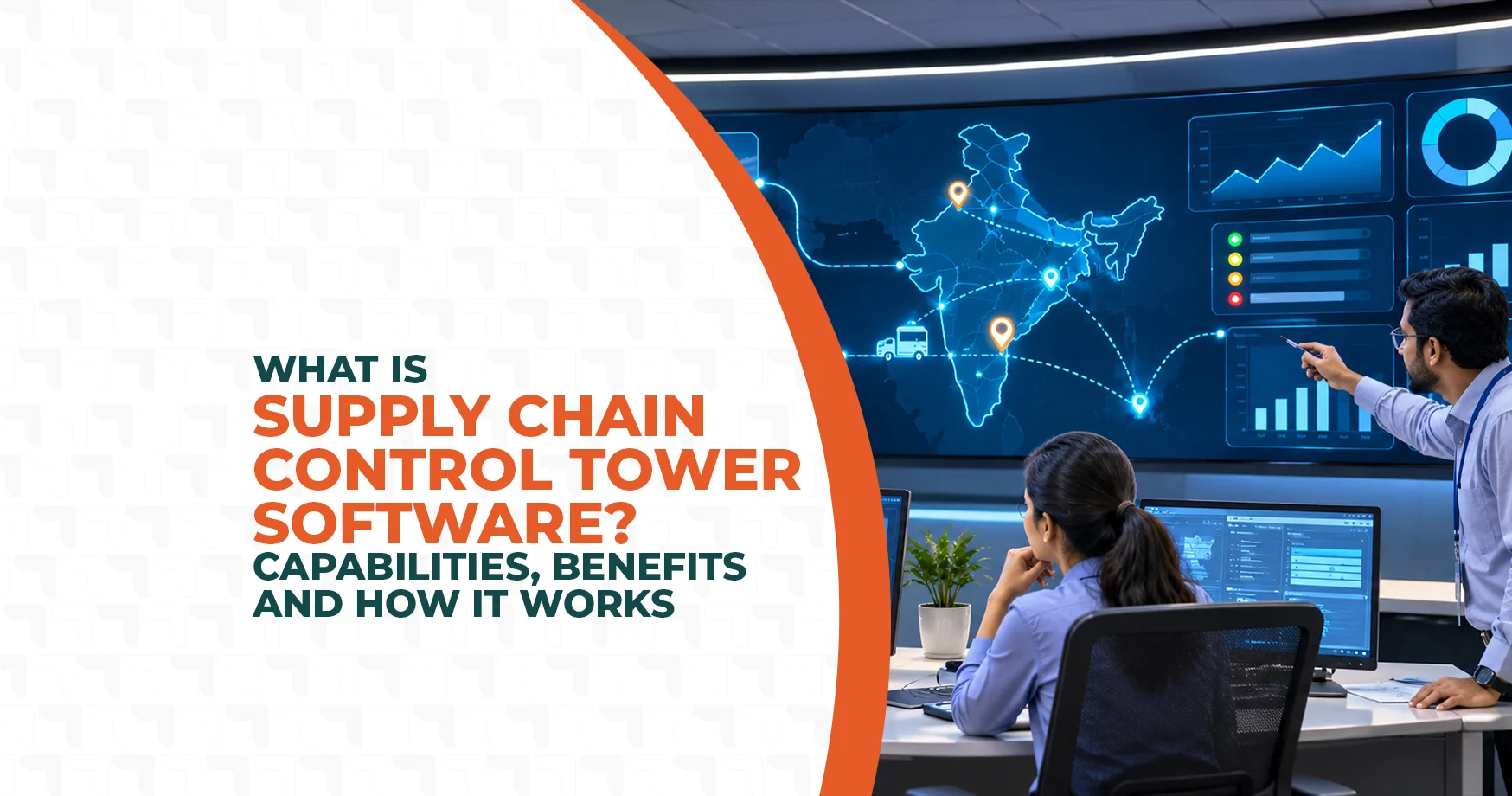
Supply chain control tower software is a central platform that unifies supply chain data into one real-time view, and it is built to close that gap. It brings scattered data into one live view, applies supply chain data analytics on top, and gives teams one place to spot problems and decide what to do next. As supply chains digitise further, the control tower is moving from a dashboard to the decision layer of the network, and it is only as good as the data captured beneath it.
What Is a Supply Chain Control Tower?
A supply chain control tower is a central command centre that provides real-time visibility and strategic control across the supply network. The name comes from aviation: an air traffic control tower coordinates aircraft using live visibility. The supply chain version does the same for inventory, logistics and partner activity.
A control tower differs from ERP, WMS and TMS in scope. Those systems plan or execute within a defined boundary such as a warehouse or finance function. A control tower unifies data from them and gives oversight across all of them.
System
Control tower
ERP
TMS
What it does
Unifies and analyses data across the supply chain
Plans and manages enterprise resources
Manages warehouse operations
Manages transportation and logistics
Scope
End-to-end visibility and oversight
Finance, procurement, production planning
Single warehouse or facility
In-transit and carrier operations
Key Capabilities of Supply Chain Control Tower Software
BCI's supply chain control tower is built around these capabilities:
- Real-time data insights: live visibility of operations as events happen.
- A 360-degree supply chain view: one central view across the supply network.
- Customised KPI monitoring: track the indicators that matter to your operation in real time.
- Cost analysis: monitor KPIs to understand and reduce cost.
- Interactive dashboards: a detailed view of operations that helps users identify challenges and resolve them.
- Integration with existing software and ERPs: unifying data sources into a central hub.
Machine learning processes complex data and presents actionable insights through visualisations, dashboards and reports, which goes beyond traditional business intelligence software.
Key Benefits of a Supply Chain Control Tower
BCI highlights these outcomes for resilience:
- Data-driven decision-making: decisions backed by live data rather than periodic reports.
- Real-time end-to-end visibility: one view from supplier to customer.
- Proactive risk management: identify and mitigate risks before they escalate.
- Cost savings: act on KPI and cost analysis.
- Greater agility: respond faster to change across the network.
- Stronger supplier partnerships: shared visibility supports better collaboration.
How Supply Chain Control Towers Work: The Data Flow
Every dashboard, alert and recommendation depends on data captured at physical points in the operation. That data starts as a scan, tag read or sensor event on the ground, not in the cloud. In BCI's four-pillar framework, the flow runs in this order:
- Data generation (hardware layer). Barcode and AIDC devices, RFID readers, vision systems, IIoT gateways and sensors, WLAN, and AMRs, ASRS and cobots capture activity at the edge. For RFID, BCI's DRISTI readers are rugged, cloud-ready UHF readers made in India.
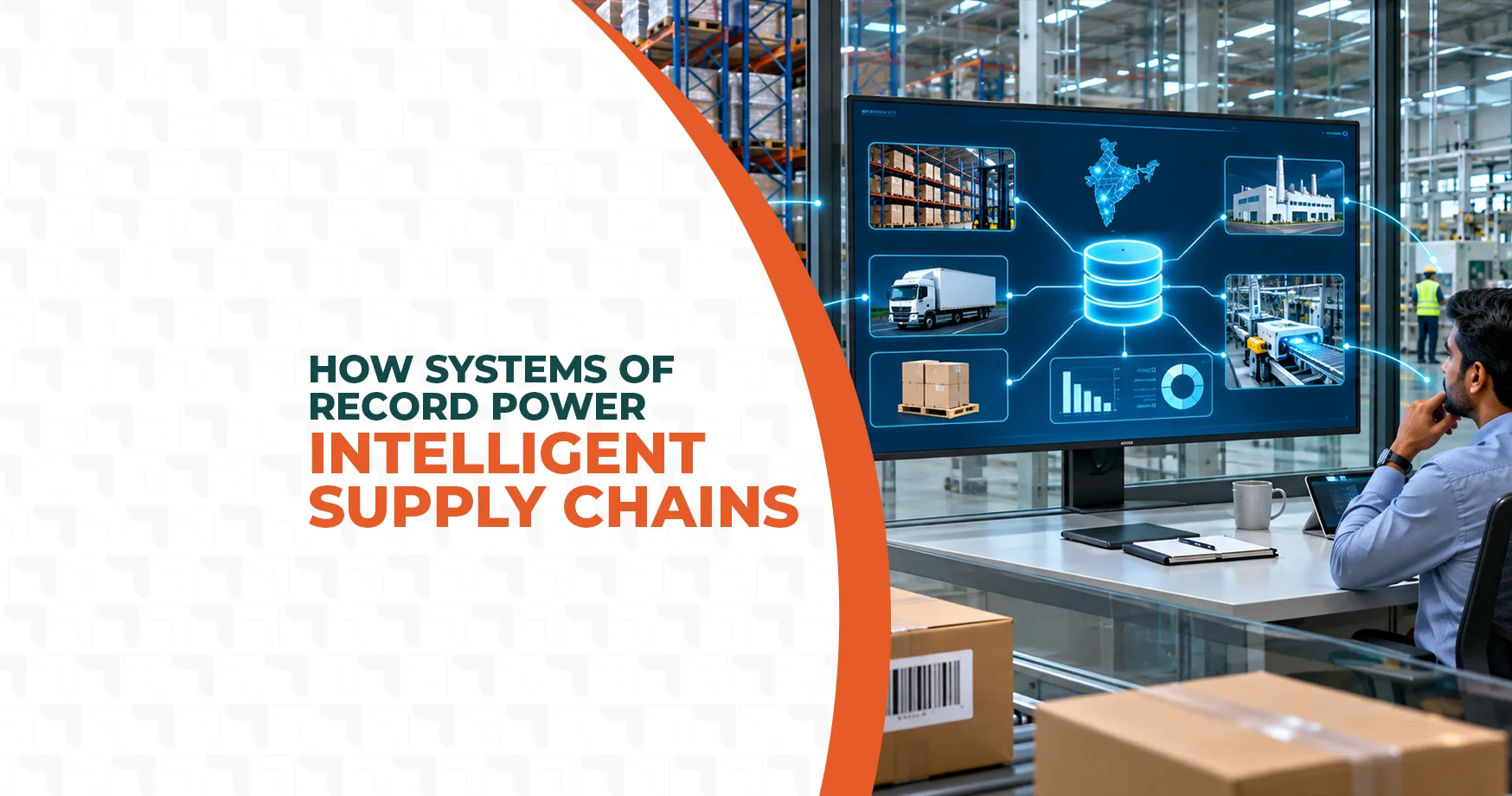
- Visibility and control (system of record). The unified, real-time operational data layer: Warehouse Management System, Manufacturing Execution System, Track and Trace, Manufacturing Intelligence, Asset Intelligence Platform and Inventory Intelligence.
- Intelligence (system of intelligence). Where analytics, decisioning and AI turn data into action. This is where the Supply Chain Control Tower, with its live dashboards, and BCI NAVI, agentic AI for warehouses, sit.
If scan coverage is partial or data is inaccurate, the control tower shows blind spots. No analytics layer can fully compensate for events that were never captured.
Where Control Towers Are Heading Next
These are directions we see in the market, not forecasts of specific results:
- From visibility to decisions. Dashboards remain the foundation, but the value is shifting to recommending and prompting the next action, with people approving the outcomes that matter.
- Agentic AI on top of trusted data. AI agents, such as BCI NAVI for warehouses, depend on a healthy system of record. The quality of AI output is bounded by the quality of capture.
- Wider data capture. More RFID, vision and IIoT coverage means fewer blind spots and richer inputs for analytics.
- Tighter links between execution and oversight. Control towers draw most value when connected to WMS, MES and Track and Trace rather than operating as a separate reporting layer.
For more on this direction, see BCI's guide to AI in supply chain management.
Industry Applications of Supply Chain Control Towers
Priorities differ by industry. These applications come from BCI's industry pages:
Industry
Consumer Durables and Electronics
Application
Advanced traceability and shop-floor integration, supporting workflow optimisation and compliance
BOM management, sensitive components and automated machine data capture for zero-defect manufacturing
Integration with packaging lines and weighing scales, FIFO/FEFO compliance, agile production planning
BOM management, sensitive components and automated machine data capture
Digital eBatch and eLogs, real-time deviation management and compliance
Stock visibility across stores, automatic reordering and easier returns
How to Implement a Supply Chain Control Tower
Successful implementation needs planning, the right technology and a commitment to continuous improvement. A typical programme covers:
- Define objectives and the KPIs that matter.
- Select technology and integrate data sources.
- Configure analytics, then test.
- Train users and customise dashboards.
- Pilot, then deploy fully.
- Improve continuously and maintain, with data security and compliance built in.
Challenges to Plan For
- Data integration: connecting ERP, WMS, TMS and partner data into one reliable view takes planning.
- Data quality at the source: gaps in scan or sensor coverage show up as blind spots in the tower.
- Organisational change: teams need training and agreed KPIs to act on a shared view.
- Investment and scope: start with a pilot tied to clear objectives before scaling.
How to Choose Supply Chain Control Tower Software
- Integration depth: connectors to your ERP, WMS, TMS and existing barcode, RFID and IoT infrastructure.
- Data quality and latency: real-time ingestion rather than batch updates that lag the floor.
- Analytics and AI capability: machine learning, interactive dashboards and a path to agentic AI.
- KPI flexibility: can you monitor the KPIs that matter to your operation?
- Industry fit: traceability and compliance needs differ across sectors.
- Hardware compatibility: the platform must work with the capture hardware you already run, because the tower is only as good as its data.
- Implementation experience: local presence and familiarity with your ERP environment.
Conclusion
A control tower is the operating nerve centre of a modern supply chain, replacing siloed views with one live picture. Looking ahead, its value will depend less on the software alone and more on how complete and accurate the capture layer beneath it is. Get capture, the system of record and the intelligence layer working in order, and the control tower delivers on its promise.
Evaluating a control tower? Talk to BCI's supply chain experts or explore the Supply Chain Control Tower.