
Why Food Manufacturers Are Investing in AI-Powered Inspection Systems
Food manufacturers today operate in an environment where product quality, food safety, and operational efficiency are under constant scrutiny. Consumers expect consistency, regulators demand compliance, and businesses face increasing pressure to reduce waste while maintaining profitability.
At the same time, many manufacturers are dealing with workforce shortages and rising labor costs, making it more challenging to sustain traditional inspection and quality control processes. As a result, organizations are increasingly investing in AI-powered machine vision systems to strengthen quality assurance, improve productivity, and build more resilient operations.
The Growing Challenges in Food Manufacturing
Quality control has always been critical in food production. However, modern manufacturing environments must contend with several challenges:
- Increasing production volumes
- Stringent food safety and compliance requirements
- Rising consumer expectations for product consistency
- Pressure to reduce waste and recalls
- Labor shortages across production and quality assurance functions
Manual inspection processes often struggle to keep pace with these demands, particularly in high-speed production environments where even minor errors can lead to significant costs.
Why Traditional Inspection Methods Are No Longer Enough
Human inspectors play a vital role in food manufacturing, but manual inspection has inherent limitations. Fatigue, subjective judgment, and the need to monitor large volumes of products can impact consistency over time.
In facilities experiencing labor shortages, maintaining adequate staffing levels for inspection and quality assurance can become increasingly difficult. This can result in bottlenecks, increased rework, and greater risk of defects reaching customers.
Manufacturers are therefore exploring technologies that can provide continuous, objective, and scalable quality monitoring.
Checkout 5 costly mistakes that happen in FMCG Industry: https://www.barcodeindia.com/blogs/costly-fmcg-production-mistakes
The Rise of AI-Powered Machine Vision
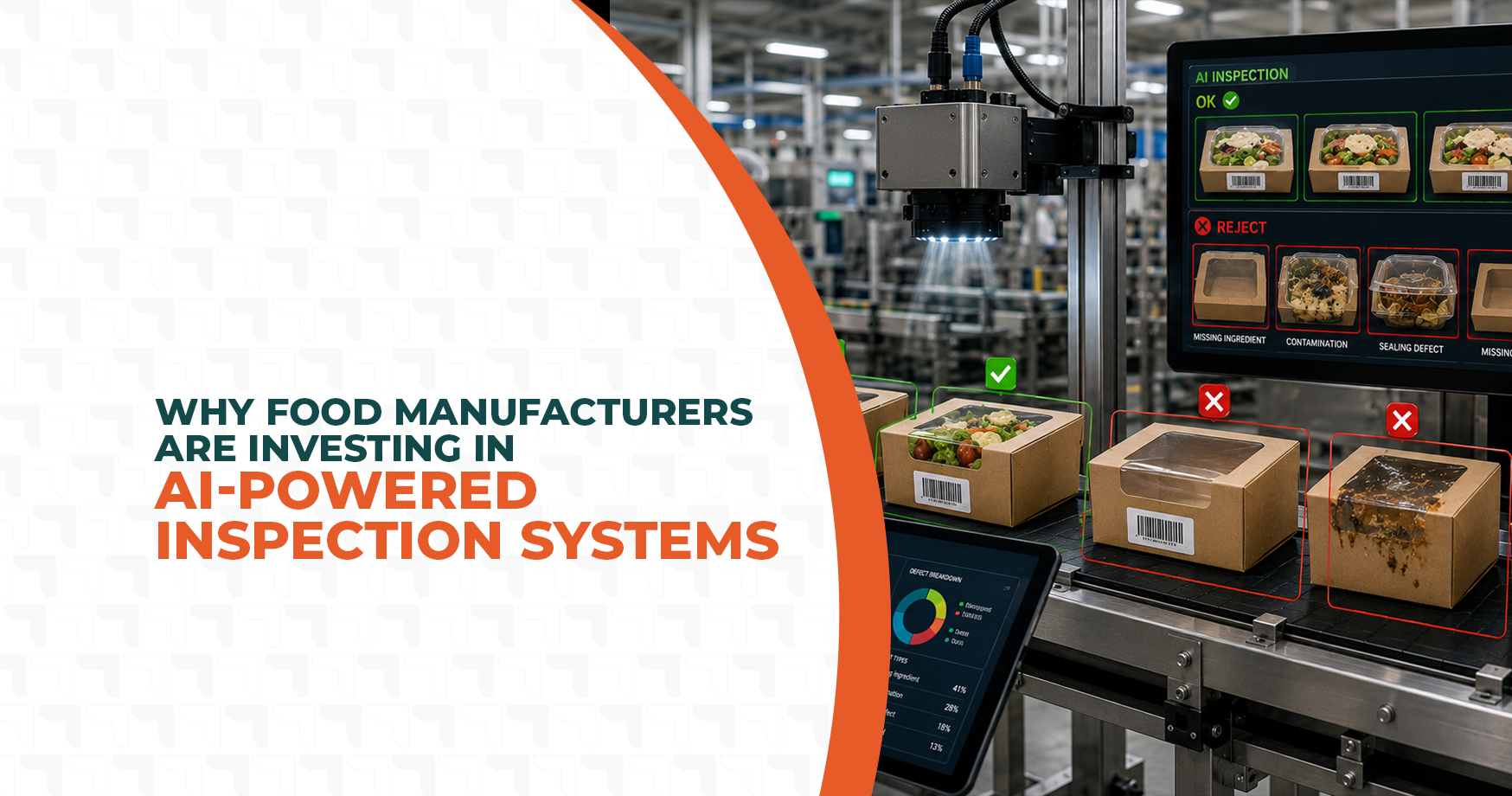
Machine vision systems combine advanced imaging technology with artificial intelligence to analyze products and production processes in real time. Unlike traditional inspection methods that rely heavily on manual intervention, AI-powered systems can inspect every item moving through a production line.
These solutions can help manufacturers:
- Detect product defects and inconsistencies
- Verify labels, packaging, and barcodes
- Monitor product dimensions and appearance
- Identify contamination or foreign objects
- Support automated sorting and classification
- Generate actionable production data
By automating repetitive inspection tasks, manufacturers can improve both accuracy and operational efficiency.
Addressing Labor Shortages Through Intelligent Automation
The objective of automation is not simply to replace workers but to enable organizations to make better use of available resources.
AI-powered Machine Vision systems can take over repetitive and time-consuming visual inspection tasks, allowing employees to focus on activities that require human expertise, such as process improvement, equipment maintenance, and production optimization.
This approach helps manufacturers maintain production standards even when skilled labor is difficult to recruit or retain.
Beyond Quality Control: Creating Data-Driven Operations
Modern machine vision systems do more than identify defects. They generate valuable operational data that can help manufacturers understand process variations, identify recurring issues, and support continuous improvement initiatives.
When integrated with broader manufacturing system and traceability systems, machine vision becomes an important component of a connected and intelligent production environment.
How Bar Code India Supports Food Manufacturers
Bar Code India enables food manufacturers to adopt advanced machine vision and industrial automation solutions that enhance product quality, operational visibility, and process efficiency.
By combining intelligent inspection technologies with data capture and traceability capabilities, manufacturers can reduce quality risks, improve productivity, and strengthen compliance across the production lifecycle.
Looking Ahead
As food manufacturers navigate evolving market demands, workforce challenges, and increasing quality expectations, AI-powered inspection systems are becoming an essential investment rather than a future consideration.
Organizations that embrace intelligent inspection technologies today will be better positioned to improve product quality, optimize resources, and build more agile and resilient manufacturing operations for the future.