Plastic packaging compliance in India: All you need to know
Plastic packaging compliance in India is increasingly becoming a production-line issue, not just an environmental reporting exercise.
For a producer, importer or brand owner, compliance may begin with EPR registration, but it does not end there. Packaging has to be classified correctly, recycled-content obligations have to be met, and prescribed information has to reach the plastic packaging in an acceptable format.
That creates a practical challenge for manufacturers. The information reported to the regulator has to match the packaging actually being produced. Once hundreds of SKUs, multiple packaging materials and high-speed production lines enter the picture, even a small gap between master data, artwork and printed output can become a compliance problem.
What does plastic packaging compliance in India involve?
The Plastic Waste Management Rules, 2016 form the foundation of India's plastic packaging framework. Subsequent amendments introduced the Extended Producer Responsibility (EPR) framework and expanded the obligations applicable to businesses handling plastic packaging.
Producers, importers and brand owners have responsibilities based on the role they perform and the plastic packaging they place on the market. Plastic Waste Processors have separate obligations under the EPR framework.
EPR registration and reporting are managed through CPCB's digital infrastructure. Businesses need reliable records of the plastic packaging they place on the market, its category, recycling obligations and other information required for their returns.
The packaging itself is divided into four categories:

This classification has a direct operational consequence. The category determines which EPR and recycled-content requirements apply, so an incorrect packaging master can eventually produce incorrect compliance data.
It also explains why packaging information increasingly needs to connect with broader product and supply-chain records.
What does Rule 11 require on plastic packaging?
Rule 11 brings another part of the compliance process directly onto the pack.
From 1 July 2025, PIBOs have been required to provide the information specified under the amended Rule 11(1) through one of the permitted routes. These include a barcode or QR code printed on the plastic packaging, the required information in a product information brochure, or a qualifying unique number issued under another applicable law. The PIBO must also inform CPCB of the route being used.
So, there is an important distinction to make:
Rule 11 does not mean that every plastic package must carry a QR code.
A barcode can be used. A QR code can be used. Other permitted routes exist for the circumstances specified in the rules.
For manufacturers choosing a machine-readable code, however, the compliance question quickly becomes a manufacturing question.
Where is the code generated? Which registration data feeds it? How is the correct information assigned to each SKU? What happens when the same packaging line runs several products? And how do you know the code printed on the finished pack is actually readable?
These questions sit squarely within the data-capture and identification layer of a packaging operation. BCI's barcode technology solutions support barcode and QR-code applications across printing, scanning and data capture.
The requirement should not, however, be confused with GS1's separate transition towards 2D barcodes in retail.
Where does plastic packaging compliance meet the production line?
This is where a regulatory requirement becomes an engineering problem.
Consider a plant running several pouch formats on the same line. The film changes, the SKU changes and the printed information changes. The underlying production equipment may remain the same, but the data going onto the pack cannot.
A reliable coding process therefore needs to control more than the printer.
Start with the packaging substrate
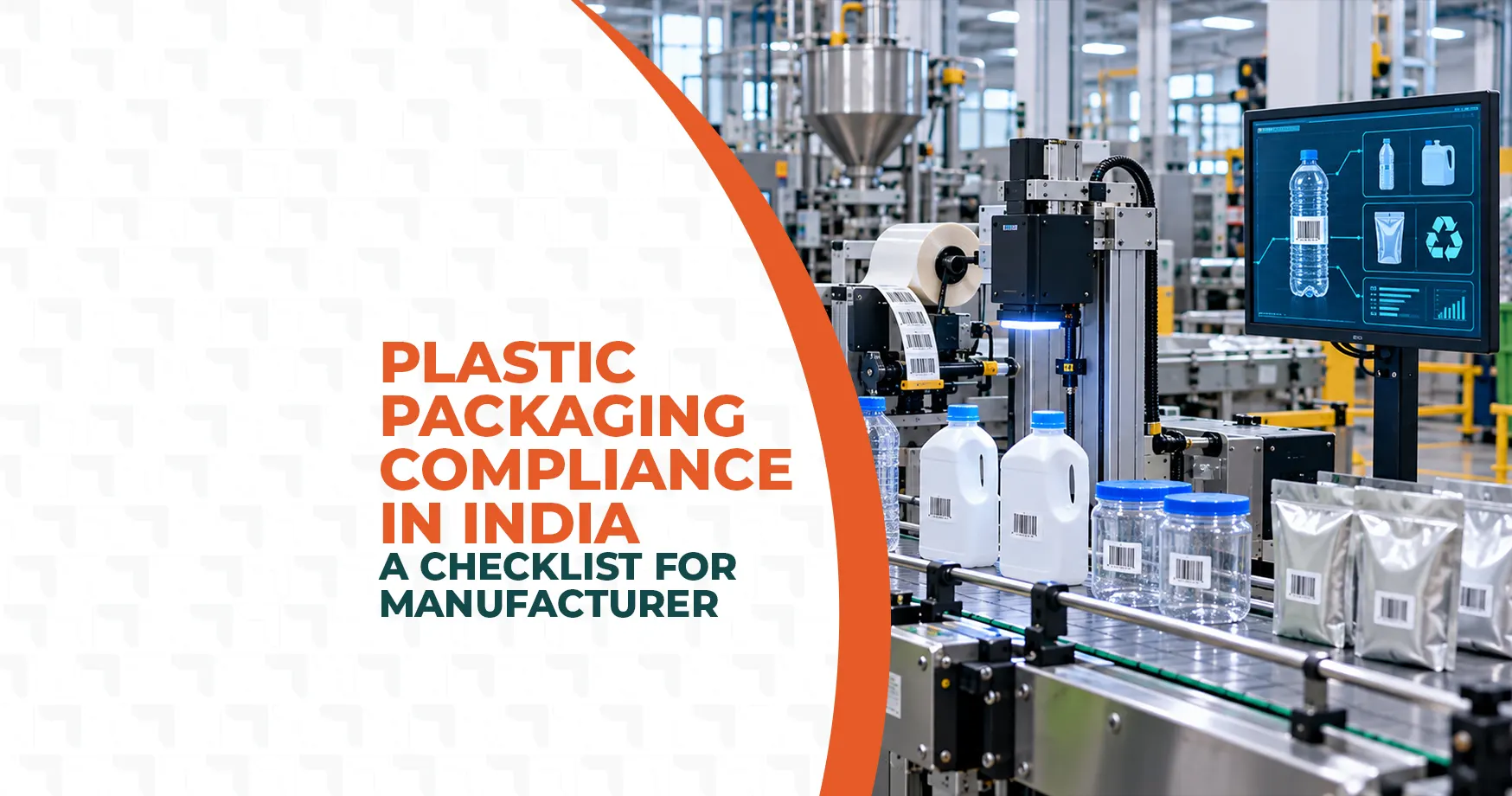
Inkjet, thermal transfer, laser and other marking approaches behave differently across films, rigid containers and other packaging surfaces. Print adhesion, contrast, placement and durability all depend on the actual substrate and production environment.
The right technology is therefore determined by the application, not simply by whether the required information is a barcode or QR code.
Control the data before it reaches the printer
A perfectly functioning printer cannot correct incorrect master data. The registration number, SKU information and other variable content need to come from controlled sources. Manual edits to artwork create another point where an outdated number or incorrect version can enter production.
That is particularly important when several SKUs share a packaging line.
Verify what was actually printed
Presence is not the same as readability. A code can be present on a pack and still fail because of poor contrast, distortion, placement or print quality. Verification at the line helps identify the problem while the packaging is still being produced rather than after finished goods have entered the warehouse.
This is also where machine vision becomes useful. BCI's Machine Vision technology supports packaging and labelling inspection, code reading and 1D and 2D code verification.
The value is not simply that a camera can "see" the code. The system can turn visual inspection into a repeatable production control.
Automate repetitive labelling work
A second problem appears when labels themselves need to be applied at production speed.
Manual application introduces variation in positioning and creates another opportunity for the wrong label to reach the wrong product. BCI's Automated Labelling Solutions address automated application and packaging-line workflows, including the use of machine vision for label and data checks.
The objective is not automation for its own sake. It is to make the identification process repeatable across shifts, operators and SKU changes.
How does traceability strengthen packaging compliance?
A printed code identifies the pack, but traceability determines what that identification connects to. For manufacturers handling multiple SKUs, batches and packaging formats, that distinction matters when investigating quality issues, managing recalls or reconciling production records.
- Connect the pack to its production history. A traceable identifier can be associated with the product, batch, production line and inspection result. This gives manufacturers a record of where and when the pack was produced.
- Extend the relationship through distribution. Individual products can be linked to cases, pallets and shipments through aggregation. If an issue is identified after dispatch, these relationships can help narrow the affected inventory instead of treating an entire production run as potentially impacted.
- Keep production data connected. At larger facilities, traceability may also need to connect with shop-floor and enterprise systems. BCI's Track and Trace solution supports identification, serialization and aggregation across packaging and distribution, while the Manufacturing Execution System supports production reporting and traceability.
The role of technology here is not to replace EPR compliance. It is to make the identification and production records behind the packaging more controlled and retrievable.
What should manufacturers do next?
Plastic packaging compliance in India is moving closer to the physical product. EPR registration and annual returns remain essential, but manufacturers also need to control what is printed, what material goes into the packaging and how those records connect with production data.
A useful starting point is to take one packaging line and trace the information backwards.
Identify the SKU. Confirm its plastic category. Check the applicable recycled-content requirement. Identify the Rule 11 information route. Follow that information into the artwork or coding system. Then inspect the finished pack and confirm that the printed information is readable and linked to the right product record.
That exercise quickly exposes where compliance depends on manual intervention.
For manufacturers looking to strengthen the technology layer around identification, coding, inspection and traceability, Bar Code India brings together barcode, machine vision, automated labelling, track and trace and manufacturing technologies for connected production environments.