
What Is Pharmaceutical Serialization? Definition, Requirements & How It Works
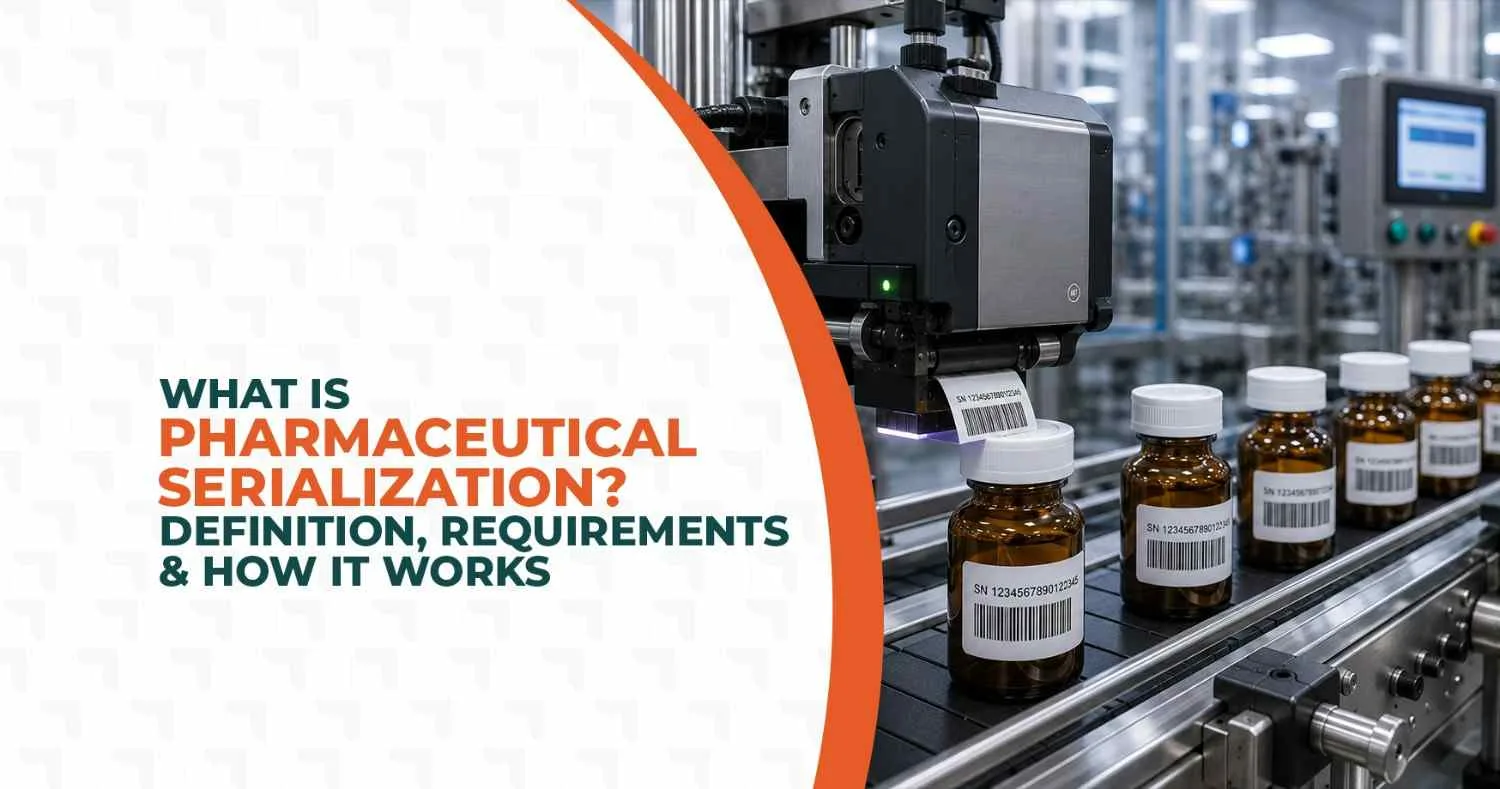
Pharmaceutical serialization is the process of assigning a unique, randomized identifier to individual pharmaceutical packaging units such as bottles or cartons. This identifier is typically encoded as a 2D DataMatrix code containing a serial number, GTIN, batch number, and expiration date. It acts as a digital fingerprint, enabling end-to-end tracking from manufacturer to patient. Serialization is the primary mechanism used globally to combat drug counterfeiting, meet regulatory compliance requirements like DSCSA and EU FMD, and ensure supply chain transparency at every stage of distribution.
The global pharmaceutical industry loses an estimated $200 billion annually to counterfeit medicines, and the consequences go well beyond financial loss. Fake or substandard medicines reach patients, cause treatment failures, and in severe cases, result in deaths. Without serialization, there is no reliable way to distinguish genuine products from counterfeits once they enter the supply chain. Serialization closes this gap by making every product unit uniquely identifiable and traceable from the production line to the pharmacy shelf.
What Is Pharmaceutical Serialization?
Serialization assigns a unique identifier to every individual saleable unit of medicine. That distinction matters when a quality issue surfaces downstream and you need to isolate exactly which units are affected without pulling your entire product line.
A standard serialization code contains four core data elements: GTIN (product ID), a unique randomized serial number, a lot or batch number, and an expiration date. These four elements encode together in a 2D DataMatrix code printed on primary or secondary packaging. Aggregation codes then link individual unit codes to case and pallet codes, so entire shipments can be verified at any point in the supply chain without opening packaging.
Why Pharmaceutical Serialization Matter
Without serialization, pharmaceutical supply chains operate with a fundamental blind spot. Once a product leaves the factory, no one downstream can independently verify its authenticity. When manufacturers implement serialization correctly, that changes across every dimension of the operation:
- Anti-Counterfeiting: Every pack carries a unique, verifiable digital identity. Counterfeit products cannot replicate a genuine serial number without triggering system alerts the moment a downstream scan occurs.
- Regulatory Compliance: Serialization meets the mandatory requirements of the FDA under DSCSA, the European Commission under EU FMD, and India's CDSCO. Non-compliance does not just result in fines. It blocks product from entering regulated markets.
- Supply Chain Transparency: Pharmaceutical track and trace capabilities give manufacturers, distributors, and regulators full visibility of product movement from production to dispensing, updated in real time at every scan point.
- Targeted Product Recalls: When a safety issue emerges, serialization lets manufacturers isolate specific units or batches from the supply chain without withdrawing the entire product line, making recalls faster, cheaper, and far less disruptive.
- Inventory Accuracy: Scan-based inventory management replaces manual counting and eliminates the errors that come with it, improving real-time stock visibility across warehouses and distribution points.
Global Serialization Regulations and Requirements
Serialization has moved from a best practice to a legal mandate in most major pharmaceutical markets. Failure to comply blocks products from regulated supply chains and exposes manufacturers to severe penalties.

United States: DSCSA requires every prescription drug unit to carry a unique product identifier from manufacturer to dispenser. As of 2024, all trading partners must exchange serialized transaction data electronically, with systems complying with 21 CFR Part 11 for validated software and full audit trails.
European Union: The EU Falsified Medicines Directive has been mandatory since 2019. Every prescription drug sold in the EU must carry a unique identifier and a tamper-evident seal, verified through the European Medicines Verification System. Any mismatch between the scanned code and the EMVS record blocks product release instantly.
India: India's 2023 amendment to the Drugs Rules requires over 300 scheduled medicines to carry a web-linked QR code or barcode encoding manufacturing date, expiry date, batch number, and license details. Export shipments must additionally meet DSCSA and EU FMD standards. Indian manufacturers investing in serialization infrastructure now are better positioned for upcoming domestic mandates than those waiting for enforcement pressure.
How the Pharmaceutical Serialization Process Works
Serialization in pharma packaging connects physical labelling on the line to digital records in regulatory repositories through a structured sequence of steps:
- Serial number generation: The serialization system generates unique, randomized serial numbers and assigns them to each production batch before packaging begins.
- Label printing: The 2D DataMatrix code containing GTIN, serial number, lot number, and expiry date prints onto packaging at high speed. The quality of printing hardware directly determines whether every downstream scan in the supply chain succeeds or fails.
- Code verification: Machine vision cameras and inline scanners check every printed code immediately after printing, confirming readability and encoded data accuracy. Any unreadable or mismatched code triggers an automatic line stop or pack rejection before the unit moves downstream.
- Aggregation: Individual unit codes link to case codes and case codes link to pallet codes, creating a hierarchical traceability structure. Scanners at each aggregation station capture these relationships and transmit them to the site server.
- MES and ERP integration: Serialization data pushes to MES and ERP systems. Only approved, fully serialized batches clear for release. The MES also manages EPCIS event generation so every status change in the product's lifecycle captures in a standardized format regulatory systems can consume.
- Repository submission: Serialized data uploads to regulatory repositories such as EMVS for EU markets and the DSCSA partner exchange for US distribution, enabling verification at every downstream touchpoint.
- Track and trace through distribution: Each scan at distribution, receiving, and dispensing points updates the product's live location in the traceability system, turning serialization into an active pharmaceutical track and trace network rather than a static compliance record.
The Role of Barcode Labelling Infrastructure in Pharmaceutical Serialization
When labelling hardware integrates with the serialization system, every printed code automatically matches its digital record. The physical product and its digital identity stay synchronized from the first print to the final dispense, forming the foundation of a compliant pharmaceutical track and trace system for pharma packaging that withstands regulatory audit and delivers genuine patient safety outcomes.
For pharmaceutical manufacturers in India, BCI's pharma industry solutions cover the full stack from hardware to software, supporting compliance with CDSCO mandates, DSCSA, EU FMD, and export market requirements from a single integrated platform.