

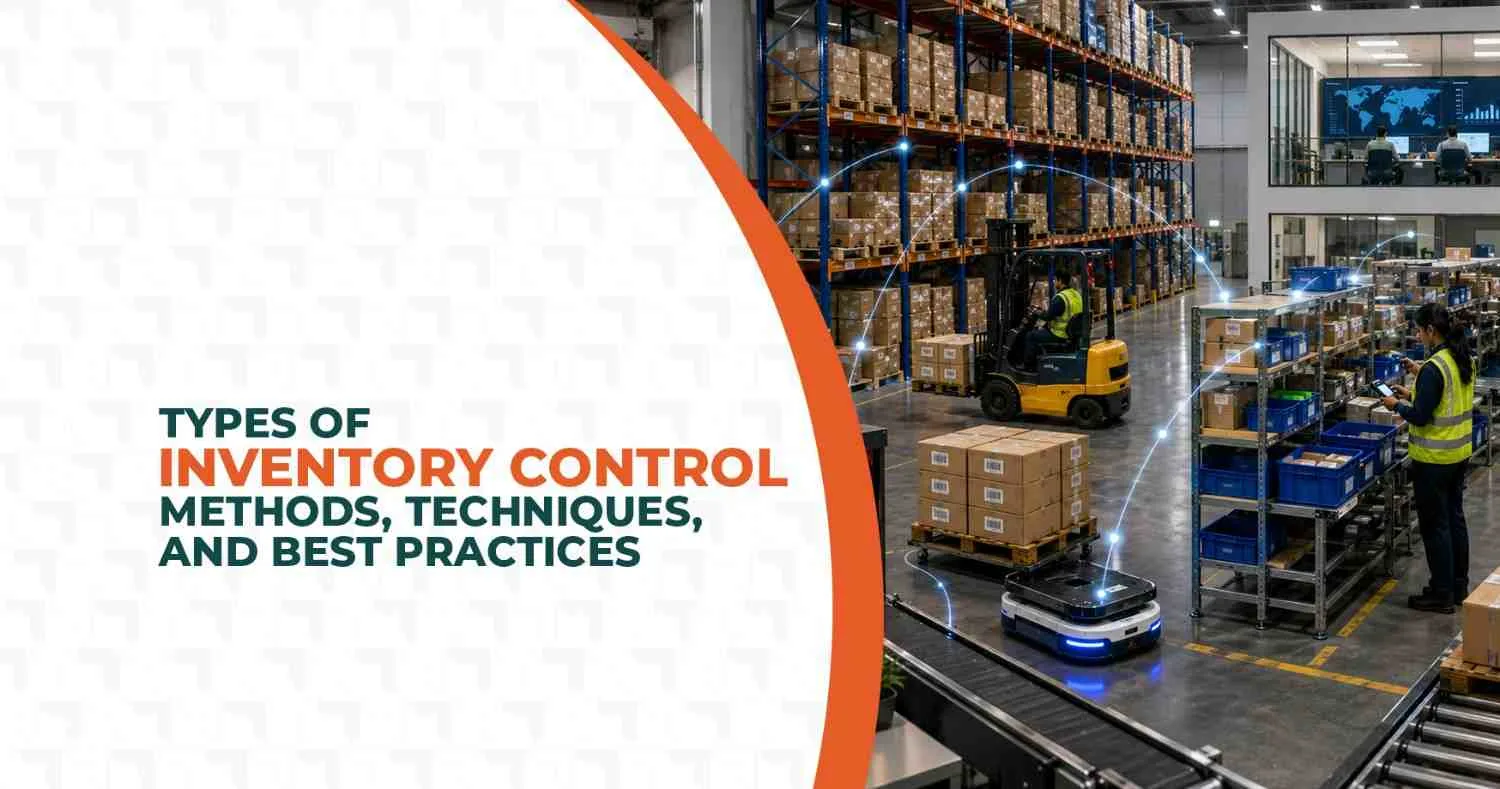
Types of Inventory Control: Systems, Methods, and Technologies for Better Warehouse Visibility
Key Takeaways
- Inventory control works best when people, process, and technology move together.
- For BCI customers, that usually means combining barcode scanning, RFID, and a warehouse management system with clear operational rules.
- The result is better stock visibility, fewer manual errors, and stronger control across warehouses and supply chains.
Inventory problems usually show up at the worst time. A warehouse may have stock on paper, but not on the shelf. A production team may wait on materials that should already be available. At the same time, excess stock can sit in storage and slow everything down.
That is why inventory control matters. It helps businesses track stock, manage replenishment, and reduce errors across daily operations. In practice, good inventory control supports smoother warehousing, better manufacturing flow, and more reliable order fulfillment.
When inventory moves through receiving, storage, production, and dispatch, every scan and every update matters. As a result, visibility becomes a business need, not just an operational preference.
What are the main types of inventory control systems?
Inventory control systems define how stock gets recorded and updated. Most operations use either a periodic system or a perpetual system.
Periodic inventory control system
A periodic inventory control system updates records after scheduled physical counts. Teams count stock weekly, monthly, or quarterly, then update the system afterward.
This approach can suit smaller operations with slower movement. It also keeps the process simple. In contrast, it gives less visibility between counts and depends heavily on manual effort.
Perpetual inventory control system
A perpetual inventory control system updates records continuously as stock moves. Every receipt, movement, and dispatch can update the system through scanning or RFID.
This model gives better real-time visibility. It also supports faster replenishment decisions and reduces stock discrepancies. For larger warehouses, distribution centers, and multi-location operations, that level of control is often essential.
Periodic vs. perpetual, at a glance:
- Periodic: manual counts, lower setup effort, fewer updates
- Perpetual: continuous updates, stronger visibility, more technology dependence
Which inventory control methods help with day-to-day decisions?
Inventory control methods help teams decide what to stock, how much to hold, and when to replenish. They do not replace physical tracking. Instead, they support better planning and control.
ABC analysis
ABC analysis groups inventory by value and importance. High-value items get tighter control, while low-value items can be managed with simpler rules.
This method works well when a warehouse handles many SKUs. For example, a business may monitor critical items more closely while spending less effort on low-impact stock. In short, it helps teams focus where it matters most.
Just in Time
Just in Time means receiving goods only when they are needed. This reduces storage needs and helps keep inventory lean.
That said, it depends on supplier reliability and predictable lead times. If supply is delayed, operations can slow down quickly. For manufacturing teams, this method works best when planning is disciplined and supply timing is stable.
Economic Order Quantity
Economic Order Quantity helps determine an order quantity that balances ordering and storage costs. It supports more stable purchasing decisions.
This method works best when demand is predictable. It helps avoid too many small orders and also avoids holding too much stock.
Reorder point method
The reorder point method triggers replenishment when stock falls to a set level. It helps teams act before stockouts happen.
This method is useful in high-movement environments. For example, a warehouse can start replenishment early instead of waiting until stock runs out. Therefore, it supports more consistent availability.
FIFO and LIFO
FIFO, or First In First Out, sends older stock out before newer stock. This is important for items with shelf-life concerns or batch sensitivity.
LIFO, or Last In First Out, uses the newest stock first. It appears more often in accounting than in physical warehouse flow. In practice, FIFO is usually more relevant for warehouse operations.
Pull quote:
Inventory control is not just about counting stock. It is about making stock movements visible and actionable.
How do barcode and RFID technologies improve inventory control?
Technology plays a major role in modern inventory control. It reduces manual entry, improves traceability, and supports faster warehouse activity.
Barcode-based inventory control
Barcode systems support accurate SKU identification during receiving, storage, picking, and dispatch. Scanning improves stock recording accuracy and reduces manual data entry errors.
This matters in day-to-day warehouse work. For example, barcode scanning can support cycle counting and location checks. It also helps teams keep inventory movements traceable across operations.
RFID-based inventory control
RFID technology allows multiple items to be read at once without line-of-sight scanning. That makes it useful in faster warehouse environments where speed and visibility matter.
RFID also supports real-time stock visibility and asset tracking. By contrast, manual scanning takes more time and effort. For operations with frequent movement, RFID can help reduce friction in the process.
Where a warehouse management system fits
A warehouse management system brings inventory tracking into one place. It can centralize stock visibility, integrate barcode and RFID data, manage location-wise stock placement, and provide reporting insights.
For customers looking for a logistics warehouse management system, this kind of visibility is often a practical foundation. It helps coordinate receiving, picking, replenishment, and dispatch across warehouse locations.
Which inventory types need different control approaches?
Inventory control does not look the same for every item. Different stock types need different handling rules.
- Raw materials: materials before production begins
- Work in progress: items currently under production
- Finished goods: completed products ready for distribution
- MRO supplies: maintenance and operational items that support facility work
For example, raw materials may need close replenishment planning, while finished goods may need stronger dispatch visibility. Similarly, MRO supplies can benefit from clear location control so teams can find them quickly when needed.
What challenges do manual inventory processes create?
Manual inventory control often creates avoidable problems. These issues usually build up over time.
Common challenges include:
- Counting errors during busy shifts
- Mismatch between records and physical stock
- Shrinkage and theft
- Poor visibility across locations
- Overstocking and shortages
- Delayed replenishment
- Data silos between warehouse, procurement, and sales
In other words, the problem is rarely one single mistake. It is usually a process issue that spreads across receiving, storage, picking, and dispatch. That is why automation in manufacturing and warehousing matters so much.
What best practices make inventory control work better?
Good inventory control needs discipline, not just software. The process works better when teams follow simple, repeatable rules.
1. Standardize SKU labeling
Clear and consistent labels help teams track stock across locations. They also reduce scan errors and misplacements.
2. Maintain cycle counting discipline
Scheduled cycle counts help teams catch issues early. It is better to count in a planned way than to wait for bigger discrepancies.
3. Define reorder thresholds
Reorder levels should reflect actual consumption and lead times. This avoids guesswork and supports better replenishment planning.
4. Track inventory accuracy KPIs
Teams should monitor location accuracy, picking accuracy, and stock variance. These indicators show where the process needs attention.
5. Automate warehouse processes
Scanning during receiving, picking, and dispatch should be standard. A printer with barcode scanner setup can also support cleaner identification and faster execution at the point of work.
6. Keep master data clean
SKU dimensions, units of measure, and storage rules need regular review. Poor master data often creates errors that look like warehouse problems.
7. Optimize warehouse layout
Fast-moving items should sit closer to dispatch zones. This reduces travel time and helps teams work more efficiently.
How should customers choose the right inventory control approach?
There is no single right answer for every operation. The right mix depends on the warehouse, the category of stock, and the level of visibility needed.
A simple way to decide:
- Review warehouse size and SKU count.
- Check how often stock moves.
- Look at current accuracy gaps.
- Assess automation readiness.
- Match the system to the business process.
For smaller operations, periodic control may be enough. For larger or faster-moving environments, perpetual tracking with barcode or RFID support usually makes more sense. In short, the goal is to match the method to the operation.
Takeaways for BCI customers
Inventory control supports better operations when it is built on visibility, discipline, and the right technology. WMS, barcode scanning, and RFID can help customers reduce manual effort and improve stock accuracy across warehouses and production environments.
For BCI customers working in manufacturing, logistics, or supply chain operations, the biggest value comes from aligning inventory control with the way the business actually moves goods. That means using the right system, applying the right methods, and keeping the process simple enough to execute consistently.