
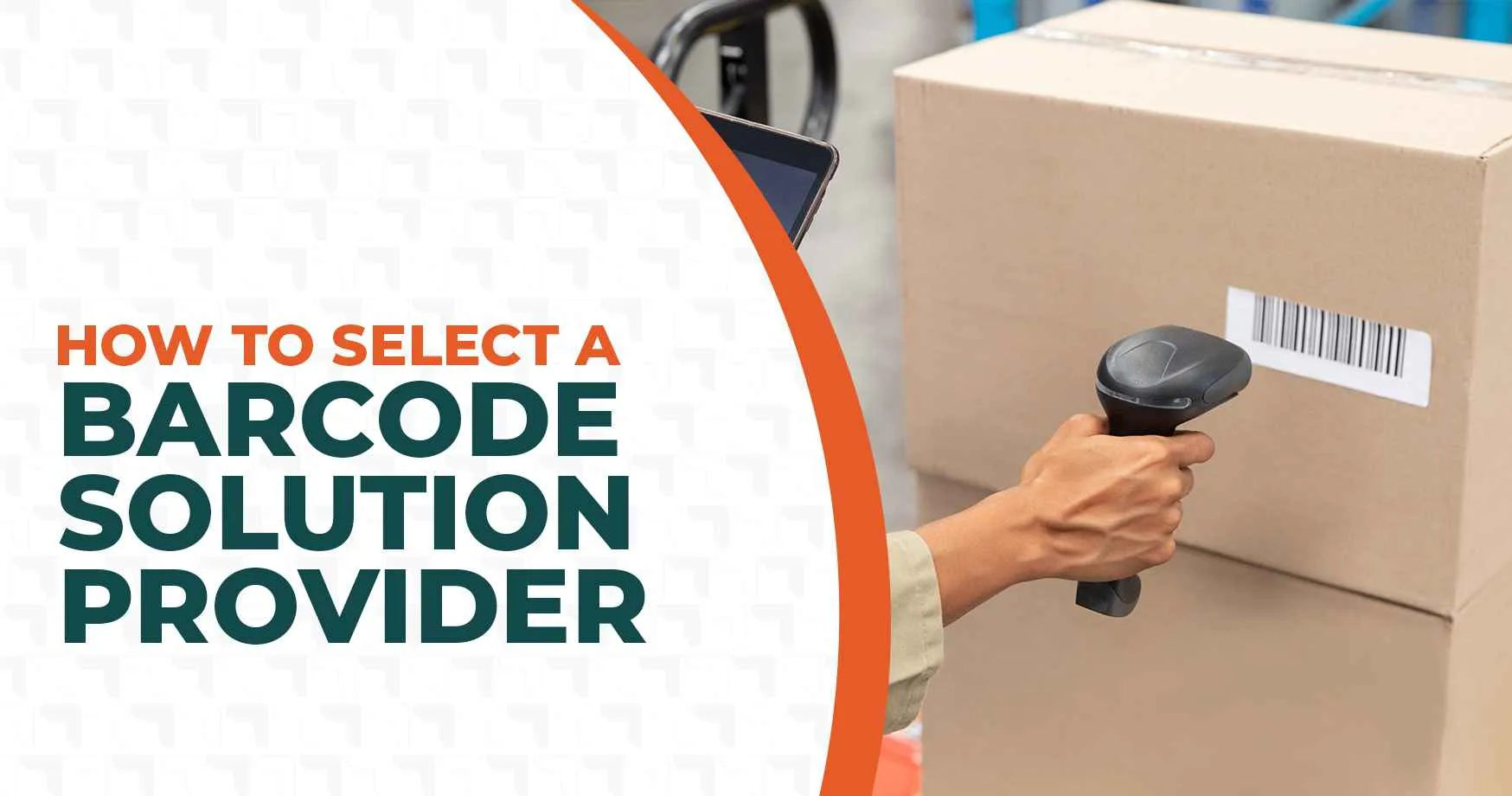
Selecting Barcode Solution Providers: What to Keep in Mind
Barcode technology has become a supportive workhorse across modern industries. Whether tracking inventory in retail and logistics to managing records in healthcare and manufacturing, businesses are relying on barcodes as their insightful eyes. And the growing demand is no surprise since barcode systems help reduce errors, speed up operations, and improve visibility across the supply chain.
But to reap the true benefits of barcode solutions in manufacturing and supply chain, you need more than just hardware. You need a reliable barcode solution provider, one that understands your industry, offers the right comprehensive tools, and supports you through every stage, from setup to scaling. Read this blog to understand how to select the right barcode solution provider.
Why Does Your Business Need a Barcode Solution?
Having a barcode solution in place makes a huge difference, whether you're tracking thousands of components in a manufacturing facility or managing shelves in a retail store. Let’s explore why integrating this technology into your workflow is a business necessity:
1. Streamlining Inventory and Asset Management
Barcode systems simplify how you track stock levels, assets, and product movements. They replace manual entries with accurate scans, helping you save time and reduce errors across your inventory management operations.
2. Enhancing Accuracy and Efficiency
Every scan captures precise data instantly, which cuts down the chances of human error. This leads to better inventory counts, smoother checkouts, and faster operations across departments.
3. Enabling Real-Time Tracking and Data Insights
Businesses can see stock levels, locations, and transactions in real time with the help of barcode scanners. This live data supports better forecasting, demand planning, and quicker decision-making.
4. Suitability Across Industries
Barcode technology is built for flexibility. With its sector-agnostic capabilities, its role remains consistent in every workflow, capturing and managing data quickly and accurately. They can integrate smoothly into a wide range of industry operations without disrupting existing workflows.
Factors to Consider Before Choosing a Barcode Solution Provider
A barcode solution provider isn’t someone who just provides high-grade hardware. They must understand your business processes, offer scalable technology, and support you throughout your user experience. A reliable provider will help you make the most of your barcode infrastructure. But how do you identify someone with such commitment?
The factors given below act like a checklist to help you make an informed decision when choosing a barcode solution provider for your business needs.
1. Business Requirements
Before you even start comparing providers, it’s crucial to get clear on what you need. Think about the size of your operation, the nature of your products or assets, and where the barcodes will be used. For ex, on packaging, equipment, inventory racks, or retail shelf.
From here, identify what kind of hardware is essential: handheld barcode scanners, label printers, or mobile terminals. Also, consider how this hardware should integrate with your existing software, like ERP or a Warehouse management system.
Also, consider whether a cloud-based or on-premise setup fits better with your internal infrastructure and data security needs. Especially when data access, security, and IT resources come into play. A clear understanding of these requirements becomes the foundation for shortlisting suitable providers.
2. Experience & Industry Expertise
Once your needs are outlined, the next step is to find a provider who understands them from experience, not just theory. A company with several years in the field is more likely to have seen (and solved) the exact problems you're facing.
More importantly, check if they’ve worked with businesses in your specific industry. For example, a provider who handles barcode deployments in high-volume logistics will better understand throughput needs, while one with pharma clients will know the importance of traceability and compliance.
3. Product & Technology Offerings
Knowing a provider has experience is great, but it must also reflect in their tech stack. A solid provider will offer a complete barcode solution, from scanners and printers to ribbons, labels, and the software that ties everything together.
Just as importantly, ensure the tech works well with your existing platforms, like inventory or order management tools. Ask if their systems are future-proof, which involves RFID support, IoT compatibility, or mobile scanning capabilities. This matters because barcode technology isn’t static. Choosing a technologically current provider means you won’t have to reinvest in a few years just to catch up.
4. Customization Capabilities
Every workflow is unique, even within the same industry. This makes customization not just helpful, but often necessary. Check if the provider offers solutions that adapt to your environment, whether that’s customizing barcode label formats, integrating scanners with your existing software, or configuring devices to suit different types of barcodes like 1D, 2D, or QR codes. The more your barcode system aligns with your process, the easier it becomes for teams to adopt and use it effectively
5. Scalability & Flexibility
Now that your current needs are covered, think long-term. Can the provider support your growth? If your business plans to expand to new locations, onboard more users, or automate more processes, your barcode system should be able to scale without needing a complete overhaul.
Look for features like multi-location support, compatibility with additional hardware, and remote access capabilities. Scalability ensures your barcode setup grows with you, not against you
.
6. Support & Training
Technology is only as good as the support behind it. No matter how intuitive the system, your team may need training to get started, and you’ll want reliable tech support to fall back on. Ask about the provider’s after-sales service: do they offer local support, or is everything handled remotely? What’s their turnaround time for issue resolution?
Equally important is onboarding: can they train your workforce quickly without disrupting daily operations? Good support ensures your team doesn’t just have the tools, but also the confidence to use them.
7. Compliance and Security
Lastly, never overlook the legal and safety side of barcode systems. Depending on your industry, your business may be required to follow specific data handling or product identification protocols.
Ensure the provider follows relevant compliance standards like GS1 and prioritizes data encryption, system access controls, and regular software updates to keep vulnerabilities at bay. This is especially crucial in industries like pharmaceuticals, food, or healthcare, where security lapses can lead to legal and operational risks.
How to Compare Barcode Solution Providers in India?
After identifying a few potential providers that align with your business needs, the next phase is to evaluate them in a structured manner. While it may seem like a natural choice to focus solely on pricing, a well-informed decision, especially in a competitive market like India, requires extra consideration. Here’s how to conduct a meaningful comparison:
1. Create a Checklist or Evaluation Matrix
Start with a focused evaluation strategy. Jot down the features and services that are non-negotiable for your operations, such as variety in hardware, compatibility with existing systems, responsive support, upgrade flexibility, and availability of customized configurations. Once listed, transform this into a visual matrix. Rate each shortlisted provider against these parameters to spot who delivers consistency and who might fall short.
2. Compare Features, Pricing & Support
Dig deeper than product specs. There are a few elements you should be weighing during your review process. Begin by checking if the provider offers diverse hardware, ERP/POS compatibility, and support for both 1D and 2D codes. Review pricing for maintenance and upgrades as well. Make sure their support is responsive and multi-channel (via email, call, or even onsite support).
3. Request Demos and Trial Periods
Evaluating on paper is just one part of the process. Experiencing the product in your setup is what truly seals the deal. Ask the provider to simulate a use case similar to your real-world workflow, like scanning products during stock entry or printing custom labels for different SKUs. Also, involve your operations or warehouse team in the trial. Their feedback will give you a ground-level view of ease of use and any practical issues that may not be obvious at first glance.
You should try exploring the benefits of barcode scanners to identify must-have features and integration standards that best match your application needs.
Common Mistakes To Avoid While Choosing Your Barcode Provider
Even with thorough research, it’s easy to overlook critical factors when selecting a barcode solution provider, especially if the focus is only on cost or brand names. Avoiding these common missteps ensures you don’t end up with a system that’s either incompatible, unsupportive, or unsustainable for your business growth.
Here are the most common mistakes to steer clear of:
- Choosing solely based on price: Low cost often means limited features, poor support, or hidden long-term expenses.
- Ignoring future scalability: A solution that doesn’t grow with your business will soon become a bottleneck.
- Not evaluating after-sales support: Implementation is just the start. But ongoing assistance, training, and service matter just as much.
- Overlooking software compatibility: If your barcode tools don’t integrate with existing systems, the workflow remains broken.
- Skipping on real-world trials: Demos and trials help uncover usability or operational gaps before full investment.
Conclusion:
Underestimating the role of a barcode solution provider can lead to missed opportunities in overcoming operational gaps and influencing growth. Instead of focusing solely on pricing, engage in consultations, experience live demos, and prioritise providers who align with your process goals and can adapt as your needs evolve. Evaluating your business flow, system compatibility, and future scalability gives you a clear picture of what solution fits best.
Working with Barcode India is a strategic investment in how your business runs, grows, and competes. Get in touch with our experts today and learn more about how our barcode solutions can optimize your on-floor operations.
You may also find these topics Interesting
6 Major Benefits of Barcode Scanners
FAQs
1. How do I choose a barcode provider?
Ans: Start the hunt for the right barcode provider by assessing your business needs, such as the types of products you handle and your workflow setup. Then evaluate providers based on their industry experience, service quality, and solution compatibility.
2. What should I look for in a barcode provider?
Ans: Look for a provider that offers reliable hardware, easy-to-integrate software, and dependable support. Their ability to customize solutions and adapt to your industry also plays a big role in long-term success.
3. How important is GS1 certification in a barcode provider?
Ans: GS1 certification is crucial for businesses involved in regulated supply chains or global trade. It ensures your barcodes meet international standards and are recognized across various platforms and industries.
4. Do barcode providers offer only labels or full solutions?
Ans: Most professional providers deliver full barcode ecosystems. This includes printers, scanners, software, support services, and accessories to help businesses run more efficiently from a single trusted source.
5. How do I know which barcode type I need?
Ans: Choosing the right barcode depends on your use case. One-dimensional codes are ideal for basic tracking, while two-dimensional or QR codes suit applications that require more data and faster scanning.
Share this page

India Has Built a Defence Manufacturing Industry. Now It Has to Prove What It Builds

What Is Pharmaceutical Serialization? Definition, Requirements & How It Works
Types of Inventory Control: Systems, Methods, and Technologies for Better Warehouse Visibility