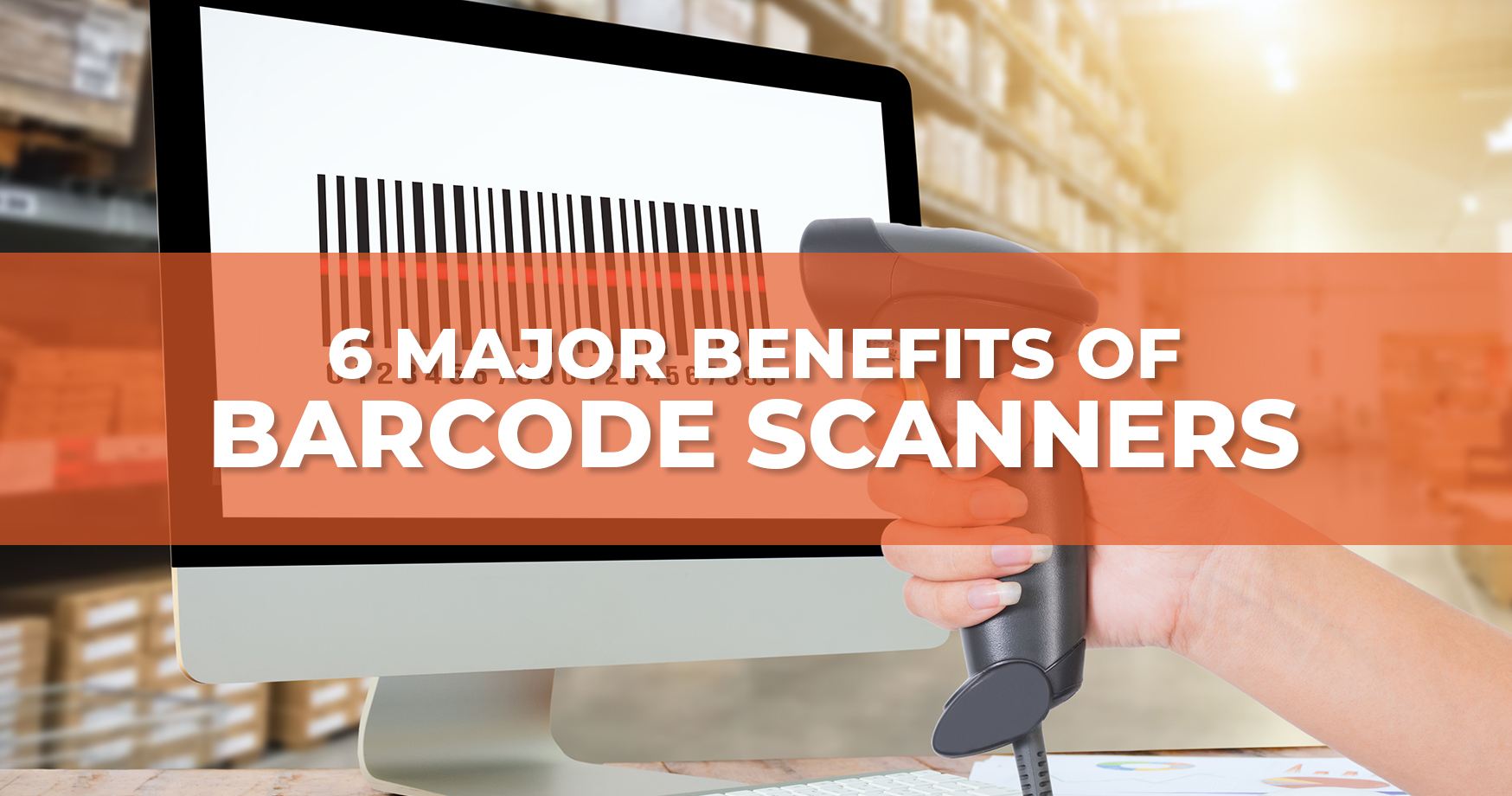
Benefits of Barcode Scanners for Modern Businesses
Barcodes are everywhere, from your neighborhood grocery store to large-scale warehouses. But other than just price tags, they are currently playing a big part in how modern businesses operate.
A barcode stores information in a visual pattern (usually black lines and white spaces), which can be quickly scanned to retrieve product details, track inventory, or update databases in real time.
India’s barcode scanner and printer market is projected to grow steadily, especially in sectors like retail, logistics, and healthcare. Hence more businesses are turning to barcode-based systems to simplify their processes. Read this blog to discover the reasons behind this widespread transition and how barcode scanners play a key role in making it possible.
Why are Barcodes Scanners Important to automate a business?
Barcode scanners play a direct role in automation by removing manual data entry from daily operations. Each scan converts a physical item into structured digital data that systems can process instantly, without human interpretation or delay. This is what allows routine activities such as inventory updates, order validation, and asset movement, to happen automatically.
When a barcode is scanned, the data is captured at the point of action and immediately pushed into connected systems such as inventory software, ERP platforms, or warehouse management systems. Stock levels update in real time, transactions are logged automatically, and process steps move forward without requiring manual confirmation. This reduces errors, speeds up workflows, and keeps records consistent across departments.
The automation impact becomes clearer at scale. Instead of staff recording item details, quantities, or locations, scanners trigger system actions like allocating inventory, validating shipments, or confirming production steps. Decisions that once depended on manual checks are now handled by predefined system rules, improving speed and operational control.
In this way, barcode scanners are not just data-reading tools. They act as input devices for automated workflows, ensuring that business systems respond instantly to what is happening on the floor, in the warehouse, or at the point of sale.
Also, you can read more about how does a barcode work, in order to gain a better understanding about how exactly it provides benefits to a business.
Top Benefits of Using Barcode Scanners
Implementing barcode scanners offers numerous advantages that contribute to the automation and optimization of business processes. Read the list of benefits below that outline the actual reasons of why businesses are taking interest into this technology on an operational front:
1. Faster Data Capture
Manual data entry is time-consuming and prone to errors. Barcode scanners significantly speed up the data capture process, allowing for rapid scanning of products and documents. In high-volume environments like warehouses and retail stores, this creates a window for quicker checkouts and inventory management. This efficiency reduces queue times and boosts customer satisfaction. It also shortens the order processing cycle, allowing teams to handle more transactions in less time.
You can read more about what is inventory management in order to understand how barcodes come into picture for this particular workflow.
2. Higher Accuracy with Fewer Human Errors
Manual data entry often leads to mistakes that can cause inventory mismatches and slow down operations. Barcode scanners help overcome this by automating data capture with up to 99.99% accuracy, ensuring reliable, error-free process tracking. This minimizes costly errors like shipping the wrong items or miscounting stock. Accurate data leads to better reporting, which improves operational visibility and control.
3. Improved Inventory Management
Barcode scanners provide that eagle-eyed vision for real-time tracking of inventory, thereby ensuring efficient cycle counting and stock management. This helps in reducing stockouts and overstocking, ensuring optimal inventory levels. They also make it easier to forecast demand and maintain balanced inventory across multiple locations. They provide a solid foundation to enforce first-in, first-out (FIFO) practices and enable faster stock reconciliation. Real-time insights allow businesses to make better purchasing and stocking decisions.
4. Easy Implementation & Minimal Training
Modern barcode scanners are designed for plug-and-play functionality, making them easy to integrate into existing systems. Their user-friendly interfaces require minimal training, so even new staff can get up to speed in no time. This means businesses can get started quickly without the need for lengthy onboarding. Less time spent training also results in reduced disruption to day-to-day operations.
5. Cost Savings Across Operations
Barcode scanners help logistics teams work smarter by automatically capturing data, which reduces manual entry errors and speeds up operations. This not only cuts down on labor costs but also minimizes material waste during handling and shipping. While there’s an upfront cost to adopting barcode technology, businesses often see a quick return on investment thanks to improved accuracy, faster order processing, and better inventory control. They also help in reducing losses due to shrinkage, misplacement, or theft.
6. Increased Productivity & Time Savings
In retail, barcode scanners make the checkout process faster and smoother, which leads to happier customers and shorter queues. In warehouse operations, they simplify both inbound and outbound logistics by quickly recording product movements. This automation frees up staff to focus on more important, value-added tasks like inventory planning and quality control. The result is faster turnaround times and more output without increasing manpower. Staff can allocate their efforts to roles that require human judgment, not just data entry.
7. Real-Time Data & Better Decision-Making
Integrating barcode scanners with ERP and warehouse management system provides instant visibility into stock movements and sales data. This real-time information supports informed decision-making and strategic planning for further business cycles. Managers can quickly identify trends, track fast-moving items, and prevent stock imbalances. Access to up-to-date data empowers teams to respond faster to operational issues.
8. Versatility Across Industries
Barcode scanners are utilized in various sectors:
- Retail: For pricing and inventory control.
- Healthcare: For patient identification and medication tracking.
- Logistics: For shipment tracking and warehouse management.
- Manufacturing: For parts tracking, issuance, stock management and quality control.
Their rugged designs and varied scanning capabilities suit everything from retail counters to industrial floors. This makes them a flexible solution that scales with the needs of different industries.
9. Enhanced Customer Experience
Barcode scanners improve customer experience by speeding up service and reducing mistakes during transactions. From point-of-sale (POS) systems and ticket counters to eCommerce order processing, they help businesses ensure correct order fulfillment and reduce returns, which keeps them satisfied with reliable service every time. Fewer errors mean fewer customer complaints and higher satisfaction levels. Consistent, accurate service builds customer trust and brand loyalty.
10. Wireless & Mobile Barcode Scanning
Wireless barcode scanners offer mobility and flexibility, allowing employees to scan items without being tethered to a workstation. This is particularly beneficial in large warehouses and retail floors. It enables real-time scanning in aisles, loading docks, and across storage areas. Workers can complete tasks more efficiently without needing to move back and forth.
Conclusion
Barcode scanners have become an essential tool in today’s business environment, helping companies improve speed, accuracy, and operational yield. Right from reducing manual errors to speeding up data capture, their use has transformed workflows across industries and resulted in successful cost-cutting and better customer service.
Bar Code India offers a complete range of barcode solutions, including scanners, printers, handheld terminals, enterprise & industrial tablet, labels, ribbons, spares, and accessories. Our products can fit various industry needs and ensure smooth integration with your existing systems and maximum performance.
Connect with our experts to avail this intelligent barcode solution for your operations. And for a broader understanding of this tech setup, you can check out our blog that explains the basics like what is barcode and how it fits into the bigger picture of your operations.