
Traceability in Manufacturing – Why It’s Crucial for Quality, Compliance, and Growth
Manufacturers across industries are under pressure to maintain high product quality, meet strict compliance regulations, and respond rapidly to operational issues.
One of the root causes of recurring quality failures, compliance penalties, and inefficient recall processes is the lack of visibility into production data. When production records are missing, fragmented, or delayed, it becomes nearly impossible to identify the origin of defects or prove regulatory compliance.
However, with the right traceability system in place, companies can capture, store, and use real-time production data to enhance process control, ensure accountability, and safeguard product integrity. Read this blog to understand what steps manufacturers are currently taking to adopt traceability as a factor in their operations.
What is Traceability in Manufacturing?
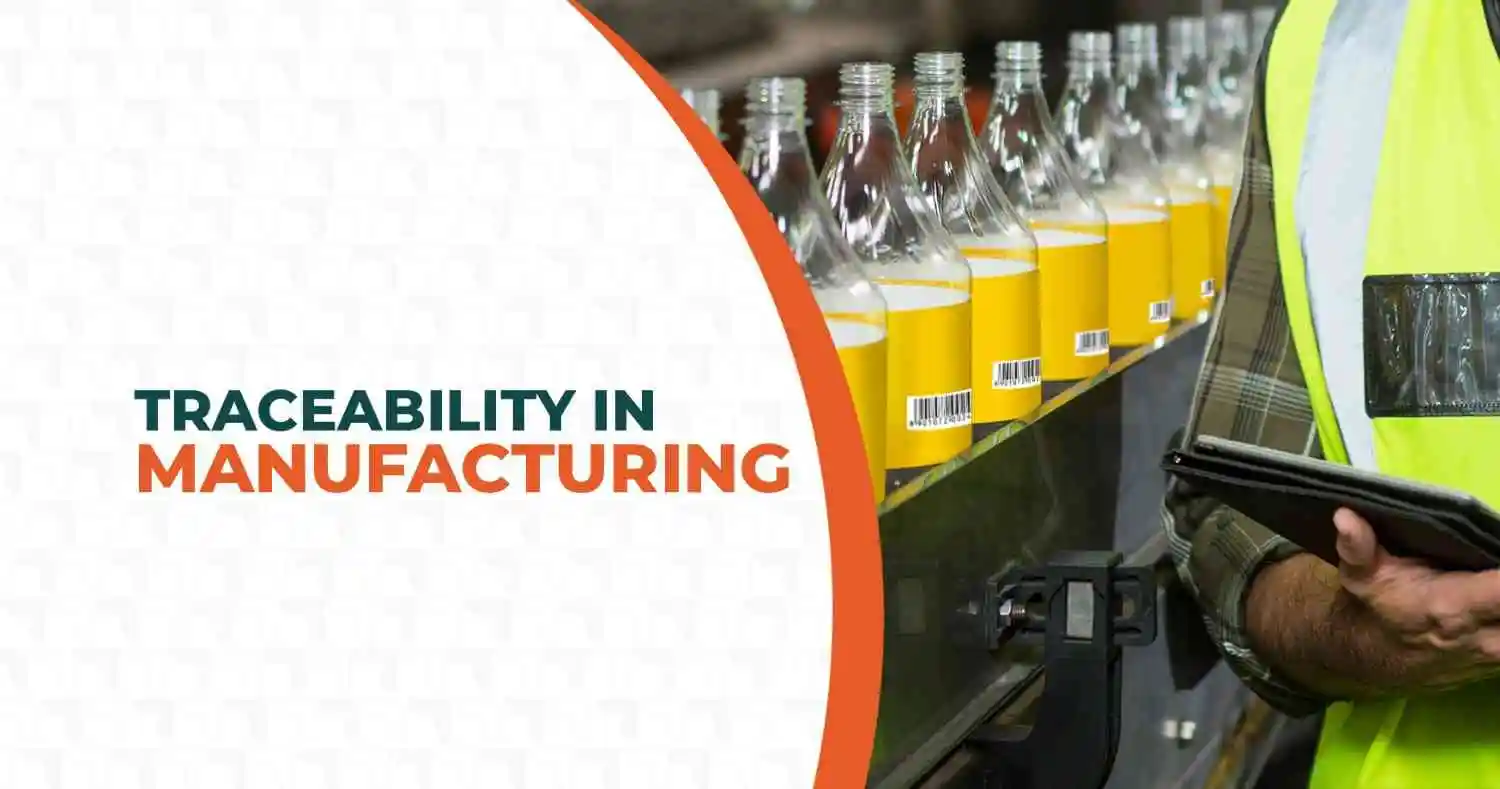
Traceability in manufacturing refers to the ability to track and trace every unit of production through all stages of the manufacturing lifecycle. This includes identifying where components originate, how they are processed, and where they are shipped. The foundation of traceability lies in precise data capture at each step of production and seamless data flow between machines, software, and enterprise systems.
Manufacturing traceability includes both forward tracing (from raw material to final product) and backward tracing (from end product back to source). Key concepts include batch tracking, lot-level traceability, component-level serialization, and integration with MES softwares for real-time monitoring.
Why Both Directions Matter
Forward and backward traceability serve different decision moments but rely on the same data architecture: unique identification at the smallest practical unit (component, batch, or serialised item), and a continuous event log linking that identifier to every subsequent step.
For Indian regulated industries, bidirectional traceability is a compliance requirement:
- Pharmaceuticals: Schedule H2 (CDSCO) for top 300 domestic brands, iVEDA (DGFT) for exports
- Automotive: IATF 16949
- Food and beverage: FSSAI, with FSMA Section 204 for US-bound exports
- Aerospace: AS9100
For example, In an electronics manufacturing plant, each printed circuit board (PCB) is marked with a unique ID. If a defect is found during final testing, the manufacturer can quickly trace it back to the exact soldering station, operator shift, and raw material batch used.
You can also explore how the benefits of barcode scanners can play their part in traceability in manufacturing.
Why Traceability Matters in Modern Manufacturing?
Traceability matters because manufacturing issues rarely remain isolated. A single gap in production data can quickly escalate into quality failures, regulatory exposure, and operational disruption. In modern manufacturing, where volume, compliance pressure, and customer expectations are tightly linked, traceability acts as the control layer that prevents small process deviations from turning into large-scale business risks.
Data Gaps Delay Root Cause Identification
The first failure point is visibility. Without traceability, quality teams may detect defects but struggle to pinpoint where they originated. Missing links between machines, operators, materials, and process conditions delay root cause identification. As investigations stretch across shifts or production cycles, defective output continues to move forward, increasing both risk and rework.
Delayed Analysis Expands Recall Scope
When issues cannot be isolated quickly, containment becomes imprecise. Instead of recalling specific units or lots, manufacturers are forced to pull entire batches or pause production lines as a precaution. This lack of precision increases scrap, disrupts supply commitments, and raises the financial impact of recalls. What could have been a controlled correction turns into a costly operational response.
Expanded Recalls Increase Compliance Risk
As recall scope expands, regulatory scrutiny intensifies. Audits require verifiable production history, not reconstructed logs or assumptions. In regulated industries such as pharmaceuticals, food, and automotive, the absence of serialized data, validated checkpoints, and time-stamped records makes compliance difficult to prove. A quality issue now becomes a compliance risk.
Compliance Pressure Slows Operations
Over time, recurring audits, corrective actions, and recall management consume operational bandwidth. Teams shift focus from process improvement to damage control. Traceability breaks this chain by creating a continuous, verifiable data record that enables faster root cause analysis, targeted recalls, and confident audit readiness.
What are the benefits of Traceability in Manufacturing?
Traceability strengthens control across production by making process data reliable, accessible, and usable when decisions need to be made. Its impact shows up in how quickly issues are identified, how precisely they are contained, and how consistently operations are maintained.
Real-Time Line Visibility
Production events are captured as they happen, not reconstructed after the fact. Variations in cycle time, stoppages, or parameter drift become visible early, giving teams the chance to intervene before output quality or schedules are affected.
Fewer Quality Deviations
Clear links between process conditions and finished output remove ambiguity during investigations. Instead of repeating inspections or approving multiple deviations, teams can isolate the source of variation and stabilize production across shifts and machines.
Lower Scrap and Rework
Materials and components remain traceable as they move through the line, making it easier to intercept non-conforming inputs before value is added. Waste is reduced by stopping errors early rather than correcting them after assembly.
Targeted Recalls and Compliance Proof
Production records remain intact from raw material intake to final dispatch. When issues surface, affected units can be identified with precision, while audit and compliance reviews are supported by verified, time-stamped data.
Better Process Decisions
Operational history builds automatically over time, revealing patterns that are difficult to see in isolated reports. Equipment settings, process changes, and training outcomes can be evaluated using actual production results instead of assumptions.
Integration with MES, ERP & Factory Systems
Traceability integrates with BCI's manufacturing execution system, ERP platforms (SAP, Oracle, Tally), and machine-level PLCs via OPC UA and Modbus, ensuring synchronised data flow across shop-floor and enterprise systems.In setups where IoT in Manufacturing is already adopted, traceability aligns naturally to enhance system-wide responsiveness.
Traceability is versatile and can be adapted to multiple sectors, each with its specific regulations and quality benchmarks.
Automotive and Aerospace
Each part links to a unique identifier, enabling batch or component-level tracking for IATF 16949 automotive quality compliance and AS9100 aerospace standards. See BCI's automotive supply chain solutions for OEM and Tier-1 deployment references.
Pharmaceuticals and Life Sciences
Indian pharma traceability operates under two parallel frameworks: iVEDA under DGFT for exported drug formulations, and Schedule H2 of the Drugs and Cosmetics Rules under CDSCO for the top 300 domestic pharma brands. Both require GS1 DataMatrix codes at primary, secondary, and tertiary packaging levels, encoding GTIN, serial number, batch, expiry, and manufacturing date (GS1 India; TraceLink India Regulatory Updates).
Electronics and Semiconductors
Traceability helps isolate PCB defects, component mismatches, or reflow oven variances. The ability to trace back to component lots and machine settings is essential for yield improvement and minimising recall costs.
Food and Beverage Manufacturing
Traceability ensures safe sourcing, expiration date validation, and hygiene checks across the supply chain. In the event of contamination, manufacturers can trace affected lots rapidly.
Integration with RFID in Supply Chain Management improves automation and speed in real-time inventory tracking.
CTA
Manufacturers replacing fragmented records with continuous data capture typically deploy BCI's track and trace solutions, which link unit-level serial data, machine events, and process checkpoints in one queryable genealogy.
Contact us today and learn more from our solution specialists to see how digital traceability can tighten compliance, reduce rework, and bring unmatched visibility to your factory floor.