

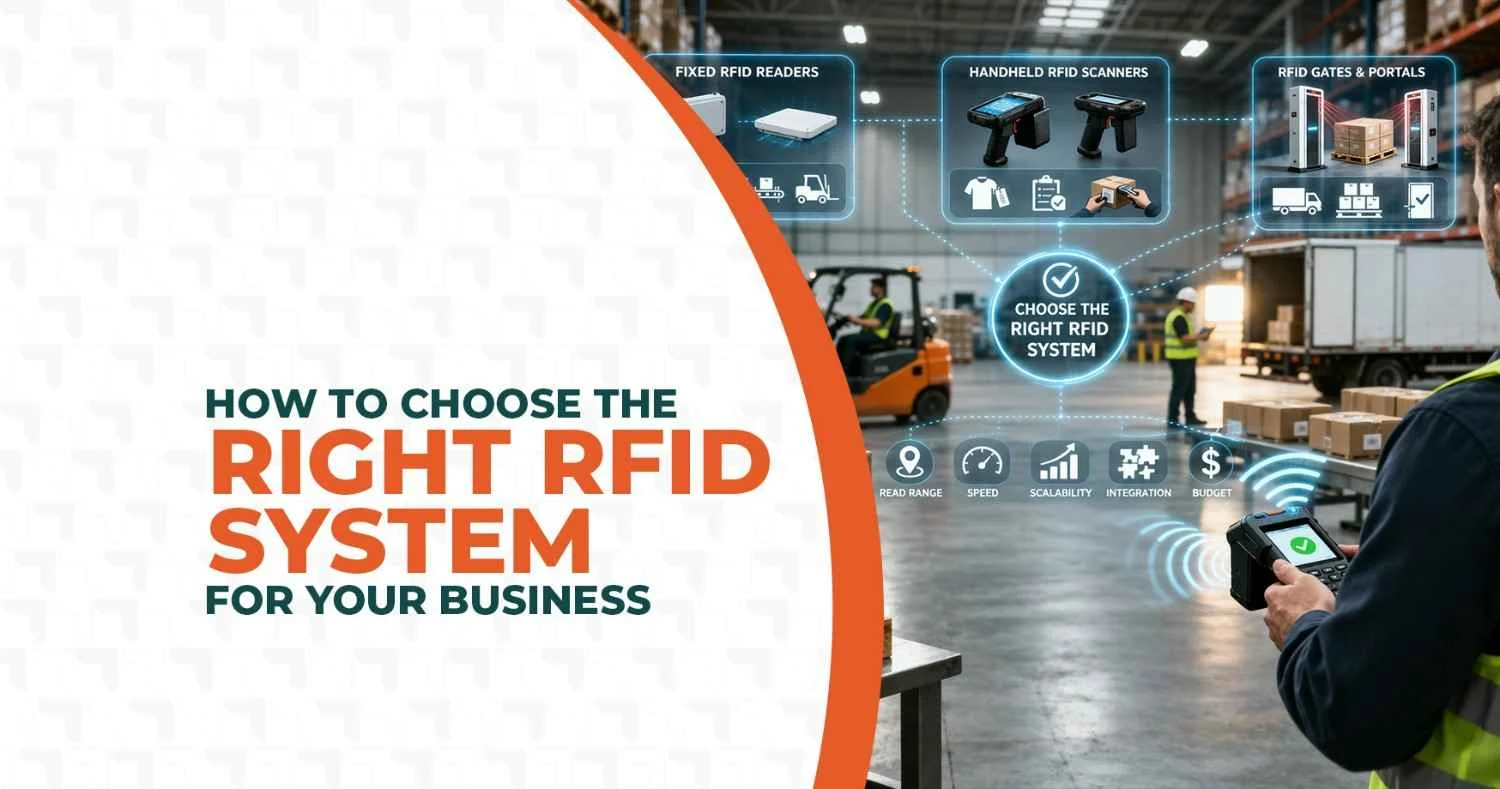
How to Choose the Right RFID system for Your Business
In today’s data-driven economy, real-time visibility, accuracy, and efficiency have become the foundation of modern business performance. Whether it is a manufacturing facility managing complex inventory flows or a logistics operator ensuring seamless deliveries, RFID (Radio Frequency Identification) technology can transform how organizations track, manage, and optimize their assets.
However, implementing RFID is not simply about purchasing tags and readers. It is a strategic decision that connects technology architecture with process design and business outcomes. Choosing the right RFID system requires an understanding of your operational landscape, infrastructure readiness, and long-term scalability goals.
Understanding RFID: Beyond Tag-and-Reader Technology
RFID systems consist of three main components — tags, readers, and a solution platform that interprets and integrates the captured information into enterprise systems. While the hardware forms the physical layer, the real value lies in how the data is organized and applied across the enterprise.
For businesses in manufacturing, logistics, healthcare, and retail, RFID delivers more than identification — it ensures end-to-end track and traceability, precise inventory control, and agile decision-making. A well-chosen RFID system can seamlessly integrate with existing ERP, WMS (Warehouse Management System), and MES (Manufacturing Execution System) platforms, improving visibility across the value chain.
Aligning Technology with Business Objectives
The best RFID strategy begins not with the technology itself but with a clear articulation of business goals. Some organizations prioritize process automation, others seek improved asset utilization, and many aim for better compliance in highly regulated environments such as pharmaceuticals or healthcare.
A manufacturing enterprise, for instance, may deploy RFID to achieve manufacturing traceability—tracking raw materials, components, and finished goods throughout each production stage. Meanwhile, a logistics company may focus on supply chain transparency, ensuring every item is accounted for from warehousing to delivery.
By aligning RFID adoption with measurable objectives — cycle time reduction, loss prevention, regulatory compliance, or customer satisfaction — businesses can ensure that their system delivers tangible ROI rather than becoming a siloed investment.
Understanding Infrastructure and Environment
No two RFID deployments are alike. Environmental conditions, material characteristics, and infrastructure constraints significantly influence the system design.
For example:
• Manufacturing environments often require rugged RFID tags resistant to heat, dust, and chemical exposure.
• Warehouse and distribution centers benefit from fixed readers integrated with conveyor or dock door systems.
• Healthcare settings prioritize high-frequency (HF) RFID for secure asset and document tracking within close proximity.
Selecting the right RFID frequency (Low, High, or Ultra-High Frequency) and tag type depends on your operating conditions and the level of precision required for each use case.
Integration with Enterprise Systems
An RFID solution gains exponential value when integrated into enterprise digital ecosystems. Linking RFID with systems such as WMS and MES enables a single source of truth across production and logistics processes. This integrated ecosystem provides companies the power to achieve:
• Real-time material visibility across production lines and warehouses.
• Automated inventory reconciliation, minimizing human errors.
• Accurate, auditable data trails that enhance compliance and product traceability.
Ensuring Scalability and Compliance
Businesses must look beyond immediate results and consider whether the RFID infrastructure can scale as operations grow. Questions decision-makers should ask include:
• Can the platform accommodate future product lines or site expansions?
• Does it support interoperability with new software or equipment?
• Can it sustain the data load as inventory volumes increase?
In addition, compliance with global standards—such as GS1 for identification and ISO for tag specifications—is crucial, especially in industries that rely on supply chain verification and regulated reporting.
Partnering for Success
Selecting the right RFID system is also about choosing the right technology partner. A partner with deep expertise in solution design, deployment, and integration ensures that RFID investments yield measurable outcomes. The most effective collaborations are those that combine industry knowledge with solution flexibility, allowing organizations to adapt as their operations evolve.
At Bar Code India (BCI), we have enabled systems across manufacturing, logistics, healthcare, and renewable energy sectors to build connected ecosystems that enhance performance, compliance, and agility. Our RFID solutions are designed to deliver business intelligence through real-time visibility and end-to-end traceability, enabling organizations to operate with confidence and precision in the digital era.
Conclusion
Choosing the right RFID system is not a one-time operational decision — it is a long-term strategic enabler. The most effective systems are those that align with organizational goals, integrate seamlessly with enterprise infrastructure, and scale gracefully with the business.
In a world where agility and accountability define success, RFID stands at the crossroads of efficiency, intelligence, and growth.
Share this page

India Has Built a Defence Manufacturing Industry. Now It Has to Prove What It Builds

What Is Pharmaceutical Serialization? Definition, Requirements & How It Works
Types of Inventory Control: Systems, Methods, and Technologies for Better Warehouse Visibility