
How Item-level RFID Can Solve 2 Major Fashion Industry Challenges
The fashion industry has always been characterized as highly competitive and turbulent. The pressure of quickly delivering the latest trends across seasons in a variety of options to customers, at a price they can afford, and keeping enough stocks of the right items makes the industry especially challenging. The industry is also notorious for its short life cycles, high volatility, low predictability, and high impulse purchasing. Hyper leaps in technology over the past few decades have completely altered the landscape of the industry. Technology has helped fashion and apparel companies to optimize their supply chains and improve their logistics. This has also amounted to higher customer satisfaction, especially with the option of online shopping. Now, not only can a customer browse through catalogues and a range of options and sizes, but they also get to track their orders in real-time until it reach their doorstep. One of the technologies that has revolutionized the fashion and apparel industry is RFID. It has given companies much better control of their business by keeping a close eye on their existing inventory stocks and valuable real-time data about sales across multiple channels. In particular, RFID item-level tagging has helped companies further improve their business.
What is item-level RFID?
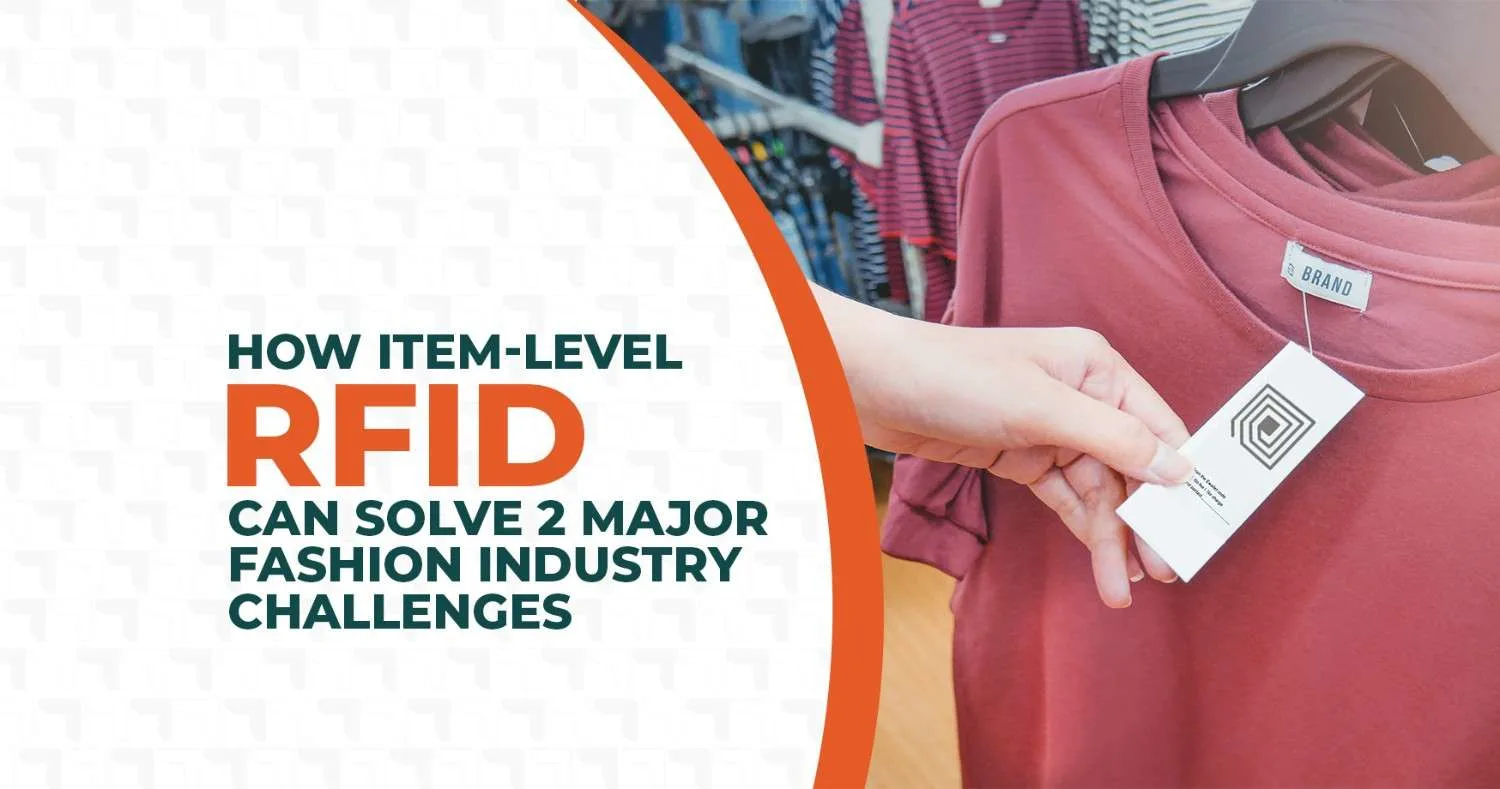
With item-level RFID, you enable a radio frequency identification that involves tagging individual inventory items (hence the term item-level) instead of tagging cartons containing multiple units. As you would have guessed, item-level RFID helps you track each item exclusively and hence allows better and more detailed inventory control.
What challenges does it solve? Let’s find out…
Challenge #1: Consistently ensure positive customer experience across channels
One of the biggest challenges for any company is to answer a customer’s questions about the sizes, colors, and options available. It is an instance that the fashion industry deals with multiple times every day. Suppose the store staff is unable to help a customer locate an item of clothing or dress they want in their size or color, or inform them where they might find it. In that case, there’s a high risk of losing that customer, as they will most likely be displeased with the experience and move to a different store that can satisfactorily answer their queries. This has become a bigger challenge with the advent of online shopping. If the items displayed are not available for shipping or the relevant choices that a customer might look for are not displayed to him or her, it puts a huge dent in their shopping experience.
Additional Read: How RFID Asset Tracking Solutions Can Increase Business Efficiency
How this is solved:In-store customer experience
Item-level RFID technology can identify the item chosen by a customer and provide a list of the available colors and sizes on the staff’s screen, answering all questions they have, even before they are asked. It also enables the sales teams to provide accurate real-time information about the availability of an item in other stores, in case it is unavailable in the current store. If required, item-level RFID can also provide suggestions on how to use a particular item of clothing and a history of how it was produced!
Online customer experience
Omnichannel retailing, which is selling your apparel across channels, usually demands higher stock levels due to higher shrinkage costs (the difference between the expected profit versus actual profit for a particular stock, which tends to be high in omnichannel retailing). It has been widely observed that implementing item-level RFID in omnichannel retailing can considerably lower costs and improve profits.
Challenge #2: Real-time control over store inventory and restocking on time
To be a leader in a competitive market such as the fashion industry, it is imperative that a company operate at high efficiency. This requires keeping track of which items of clothing are popular, which ones are not catching the fancy of people, which ones are available in enough quantity in the store, and which ones are running out so they can be restocked in time. An out-of-stock situation can be quite embarrassing at times, but what’s worse is that it can lead to a poor customer experience. How this is solved: Tagging individual items of clothing enables your staff to know the exact location of an item on the shop floor, whether it’s been taken to the trial room, or it’s on the way from the changing rooms to the floor, or whether it is on display where it’s supposed to be. This enables sales representatives present at the store to quickly guide a customer to find that one specific item they are looking for. It also helps your staff know exactly when to restock which item, enabling you to have greater control of your inventory than ever, and keeping your customers satisfied. According to a Gartner report titled ‘Innovation Insight for Item-Level RFID in the Transformation of the Retail Store,’ “Item-level RFID is transforming operational efficiencies in the retail store, as it can achieve inventory accuracy rates of over 98%, enable real-time inventory visibility, increase labor savings, and improve loss prevention, as well as a myriad of other use cases.” So, item-level RFID tagging ensures higher retail efficiency and performance, which eventually translates to superior customer satisfaction. Recently, BCI helped Wills Lifestyle (WLS) become the first retail brand in India to implement 100% item-level RFID tagging in its high-fashion retail garment business. The influential lifestyle brand sells over 1.5 million premium garments each year through its nationwide network of over 50 exclusive retail outlets serviced by 2 regional mother hubs. Running a business marked by long and complex supply chains, there was a clear need for optimizing operational efficiency. The challenges WLS faced were poor supply chain visibility owing to their long and complex supply chains across multiple locations, loss of sales due to traditional processes, and a need to improve customer experience. If you wish to read how BCI helped WLS overcome these problems, you can access the case study here. If you are facing any issues with your retail supply chain management, please feel free to reach out to us here, and we can help you create a list of simple, actionable steps that will take your business to the next level. Also Don’t forge to read about importance of RFID tagging in retail.
Share this page

India Has Built a Defence Manufacturing Industry. Now It Has to Prove What It Builds

What Is Pharmaceutical Serialization? Definition, Requirements & How It Works
Types of Inventory Control: Systems, Methods, and Technologies for Better Warehouse Visibility