
FIFO vs LIFO: Meaning, Differences, Advantages, Disadvantages & Examples
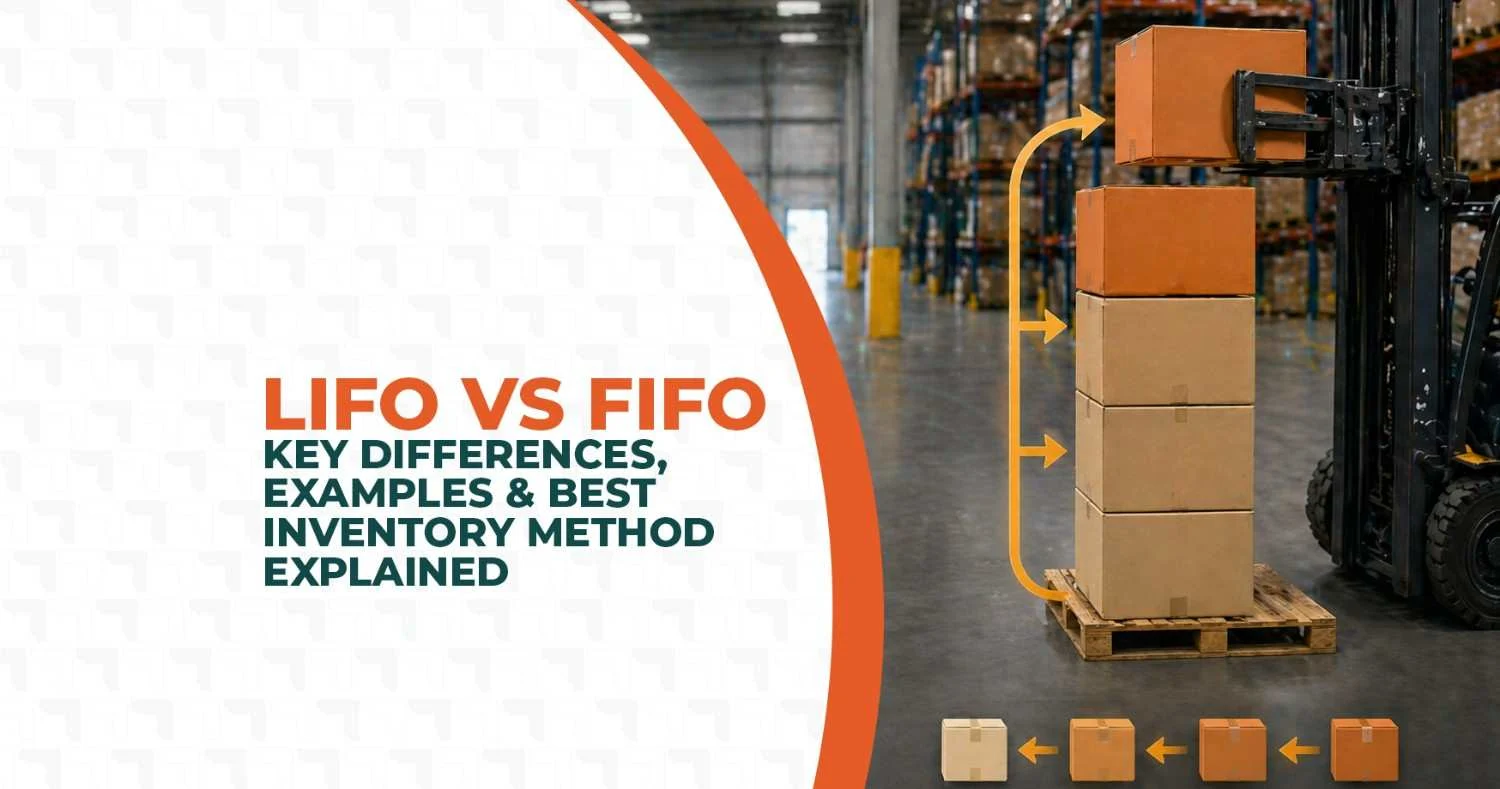
FIFO (First-In, First-Out) and LIFO (Last-In, First-Out) are inventory valuation methods that decide which purchase costs are treated as sold first. FIFO assumes older inventory moves out before newer stock, while LIFO assumes the most recent purchases are sold first. This choice directly affects Cost of Goods Sold (COGS), profit, taxes, and inventory value. FIFO usually follows real inventory movement, especially for perishable or time-sensitive goods. LIFO is mainly an accounting approach used to match newer, higher with revenue during inflation.
What is FIFO (First-In, First-Out)?
FIFO (First-In, First-Out) assumes that the inventory items purchased or produced first are sold first. As a result, the remaining inventory at the end of an accounting period consists of the most recently acquired items.costs
In simple terms, FIFO treats inventory costs in the same order they enter the business.
How FIFO works step by step
- Inventory is purchased or manufactured and recorded with cost and date
- When sales occur, the system assigns the cost of the oldest available units to COGS
- Unsold inventory reflects newer purchase prices on the balance sheet
This sequencing stays consistent regardless of how prices move.
Real-life examples of FIFO:
1. Non-warehouse example – Grocery store
A grocery store sells milk cartons based on expiry dates. Older cartons must leave the shelf first. Selling newer stock first would cause spoilage, write-offs, and compliance issues.
2. Warehouse-driven example – Pharmaceutical distribution
Medicines are issued by batch and expiry date. FIFO, often refined into FEFO (First-Expired, First-Out), ensures patient safety and regulatory compliance. Here, FIFO is not optional; it is embedded into daily execution.
What is LIFO (Last-In, First-Out)?
LIFO (Last-In, First-Out) assumes that the most recently purchased inventory is sold first. This means the inventory remaining on the balance sheet consists of older costs, sometimes from several years earlier.
LIFO is primarily an accounting construct rather than a reflection of physical inventory movement.
Why businesses use LIFO
The main driver is inflation.
When prices rise:
- Newer inventory is more expensive
- LIFO assigns these higher costs to COGS
- Reported profit falls
- Tax liability reduces
This makes LIFO more favorable as a tax-management strategy rather than an operational one.
Industry-specific relevance
LIFO appears most often in industries where:
- Inventory is non-perishable
- Materials are stored in bulk
- Physical separation of batches is impractical
Real-life example
A steel yard receives new steel coils regularly. Newer material is stacked on top of older stock. When material is issued, it is often taken from the top. While physical flow may resemble LIFO, the accounting method is chosen mainly to manage cost exposure during price fluctuations.
FIFO vs LIFO: Key Differences (Comparison Table)
The difference between FIFO and LIFO lies in how inventory costs are layered and released into COGS. This difference affects profits, taxes, inventory valuation, and financial reporting outcomes even when sales volumes remain unchanged.

Advantages and Disadvantages of FIFO
FIFO is often treated as the default inventory method, but that does not mean it is neutral. It creates clear winners and clear trade-offs depending on price movement, reporting goals, and how closely finance needs to reflect operational reality.
Advantages of FIFO
Accurate inventory valuation
Under FIFO, the inventory remaining on the balance sheet reflects the most recent purchase prices. This matters because inventory is not just a cost bucket; it is a reported asset. When prices move frequently, FIFO prevents inventory values from drifting away from market reality.
Better alignment with perishable and regulated goods
FIFO naturally fits industries where time affects value. Food, pharmaceuticals, chemicals, and personal care products cannot afford inventory sitting unnoticed. FIFO aligns accounting with how goods must move to stay usable and compliant. This reduces write-offs, improves batch control, and supports expiry-driven execution without forcing accounting exceptions later.
Disadvantages of FIFO
Mismatch between revenue timing and cost relevance
FIFO matches today’s sales with costs incurred months earlier. In stable pricing environments this is manageable. In volatile markets, it weakens margin analysis. Finance teams often need additional reporting layers to understand true operating performance beyond statutory numbers.
Advantages and Disadvantages of LIFO
LIFO is rarely chosen for operational convenience. It is chosen deliberately, usually under inflation pressure, and often with tax planning in mind. That focus brings benefits, but also long-term constraints.
Advantages of LIFO
Closer matching of current costs to current revenue
Because LIFO uses recent purchase prices, reported margins reflect current economic conditions more closely. This helps management evaluate pricing decisions, supplier changes, and cost trends without older cost layers distorting results.
Disadvantages of LIFO
Inventory values lose relevance over time
Under LIFO, unsold inventory layers may remain valued at very old prices. Over time, balance sheet inventory can drift far from current market value. This weakens inventory tracking and complicates comparisons across periods or against peers using FIFO or weighted methods.
FIFO vs LIFO: Which Inventory Method Should You Choose?
There is no universally correct choice. The decision depends on how inventory moves through the business, how costs change over time, and what risks matter most at the operational and financial level.
Choose FIFO if:
- Inventory loses value, usability, or relevance the longer it sits
- Stock is rotated frequently and ageing must stay visible
- Purchase prices change, but replacement availability matters more than short-term margin optimisation
- You want inventory values that stay close to what it would cost to restock today
- Operations, reporting, and day-to-day controls need to follow the same logic
FIFO works best when the business depends on clean rotation, predictable movement, and clarity between what is stored, what is sold, and what remains.
Choose LIFO if:
- Inventory does not expire, degrade, or become obsolete over time
- Stock is accumulated in bulk and drawn down gradually
- Input costs rise steadily and directly compress margins
- Cost matching matters more than inventory valuation accuracy
LIFO is a financial positioning method. It does not improve inventory movement or visibility. It requires careful planning, stable purchasing patterns, and acceptance of distorted inventory values over time.
Summary: FIFO vs LIFO
- FIFO keeps inventory values close to current purchase prices and matches how goods usually move out of storage
- LIFO is mainly used to reduce taxable profit when input costs keep rising
- Accounting standards can restrict the choice, regardless of business preference
- Inventory type and turnover speed influence which method creates fewer problems
- The difference between FIFO and LIFO changes reported profit, tax outflow, and balance sheet numbers
Understanding FIFO vs LIFO advantages and disadvantages helps businesses choose a method that fits both execution and reporting realities.
The Role of BCI in Enabling Accurate Stock Movement
Implementing FIFO or LIFO effectively in large operations depends on a robust Warehouse Management System (WMS).
BCI’s WMS delivers real-time inventory tracking, automated order management, and system-wide integration that keep stock visibility precise across all facilities. Through mobile accessibility, picking logic, and integrated reporting, BCI ensures that warehouse teams can enforce FIFO or any tailored stock movement rule consistently and efficiently.
For industries such as FMCG and pharmaceutical distribution, where FIFO or FEFO discipline underpins compliance, BCI’s WMS offers reliability and scalability that align perfectly with operational goals.
By integrating with ERP, e-commerce, and logistics platforms, BCI transforms warehouse management into a data-driven, transparent, and business-critical function.