

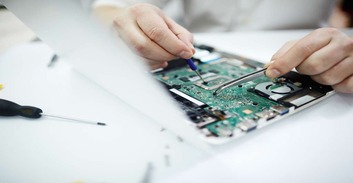
Why Traceability is a ‘Must-Have’ in Electronic Manufacturing
Complete and accurate traceability is no longer merely an option in electronic manufacturing. Given the nature of this dynamic, quick-paced, reactive environment, manufacturers today must have access to comprehensive material, product, and process information in order to better manage the production environment. Today, brand owners (OEMs) are worried about safeguarding their reputation as outsourcing rises. Providers of electronic manufacturing services (EMS) must address this issue by offering traceability data in order to keep current clients and win new manufacturing contracts. Traceability also plays a major role in compliance, which will only get more stringent in the future. Additionally, even though every electronic manufacturer needs to have a robust traceability system in place, the present safety-critical markets, such as those for products for the automotive, aerospace, or medical industries, are either customer-driven or specialized to these requirements.
Complexity in providing manufacturing traceability
Concise product lifecycles and a high product mix running concurrently on the shop floor are two characteristics of electronics production today. The potential of quality problems that might not be identified until later in a user environment is increased by miniaturization and ongoing advancements in component technologies. Furthermore, manufacturers are required by legal standards, such as lead-free assembling, to record and preserve shop floor activities long after their products have hit the market. Traditional methods of performing traceability no longer stand a chance in the manufacturing environment of today.
Why is traceability so critical to electronic manufacturing?
Traceability is so important to electronic manufacturing because of the following reasons:
1. Better quality control
The majority of electronics production is focused on producing high-quality products for a variety of industries such as telecommunications, consumer, medical, and automotive industries. Most electronic parts produced cannot afford to have even one flaw because a seemingly tiny problem with an electronic product could have catastrophic effects on the end user. A reliable traceability system ensures product quality and eliminates defects.
2. Eliminate recalls
By limiting the scope of product recalls in the event of problems, traceability also helps to lessen culpability. By addressing the broad customer, market, and regulatory needs, providing traceability gives firms a considerable competitive edge. In order to shield a business from responsibility in the event of a recall, traceability is crucial. When associated with an organization, traceability markers create an ongoing paper trail. This gives producers the proof they need to demonstrate their products met any quality or safety criteria and can sometimes limit the size of a recall from millions of units to just a few.
3. Spotting roadblocks
With the help of this cutting-edge technology, production difficulties or patterns may be rapidly identified, and proactive improvements can be made. It can provide visibility into the whole lifecycle of each part.
4. Manage audit trail
Traceability also offers a documented trail of each product, its history, components, quality, and safety to assure transparency and responsibility across the supply chain. It demonstrates that goods adhere to industry rules or meet particular requirements.
5. Combat counterfeiting
Recent times have witnessed an increase in counterfeit goods. By duplicating, returning, or reselling items like airbags, electronics, and medical gadgets, counterfeiters make money, while manufacturers lose money and risk losing their jobs. Consumers are also impacted by counterfeiting. Numerous "fake" products, including electrical appliances and safety gear, fall short of the safety and quality requirements of their authentic equivalents, posing a severe risk to end users. Traceability plays a huge role in combating counterfeit products, as it ensures that any missing data or discrepancies found on a barcode can quickly identify non-authentic products. Unlike in the past, traceability is a requirement today. It is necessary for any electronic manufacturer to invest in a robust traceability solution that can be configured to their use cases.
To Conclude
Traceability solutions play a critical role in ensuring the quality and safety of electronic products, while also helping manufacturers to improve their operations and meet regulatory requirements. Electronics firms have a lot to gain from implementing traceability systems in the current competitive environment. In addition to giving them a sizable competitive advantage, it also facilitates production process improvement, improved supply chain management, reduces the chance of failures, and raises customer satisfaction. mobivue em (emPRO) by Bar Code India Ltd (BCI) is a next-gen Industry 4.0 solution for complex, discrete electronic manufacturing processes. Hand-crafted by our team of industry experts with 27+ years of experience, it helps achieve 360° traceability across all manufacturing stages. It is a modular and scalable solution that is configurable to fit any company’s mandates and provides business intelligence and analytics for data-driven decision-making. If you want to know how mobivue emPRO can improve your manufacturing processes, feel free to reach out to us here.
You may also find this topic interesting.
Traceability in Manufacturing – Why It’s Crucial for Quality, Compliance, and Growth
Share this page

India Has Built a Defence Manufacturing Industry. Now It Has to Prove What It Builds

What Is Pharmaceutical Serialization? Definition, Requirements & How It Works
Types of Inventory Control: Systems, Methods, and Technologies for Better Warehouse Visibility