
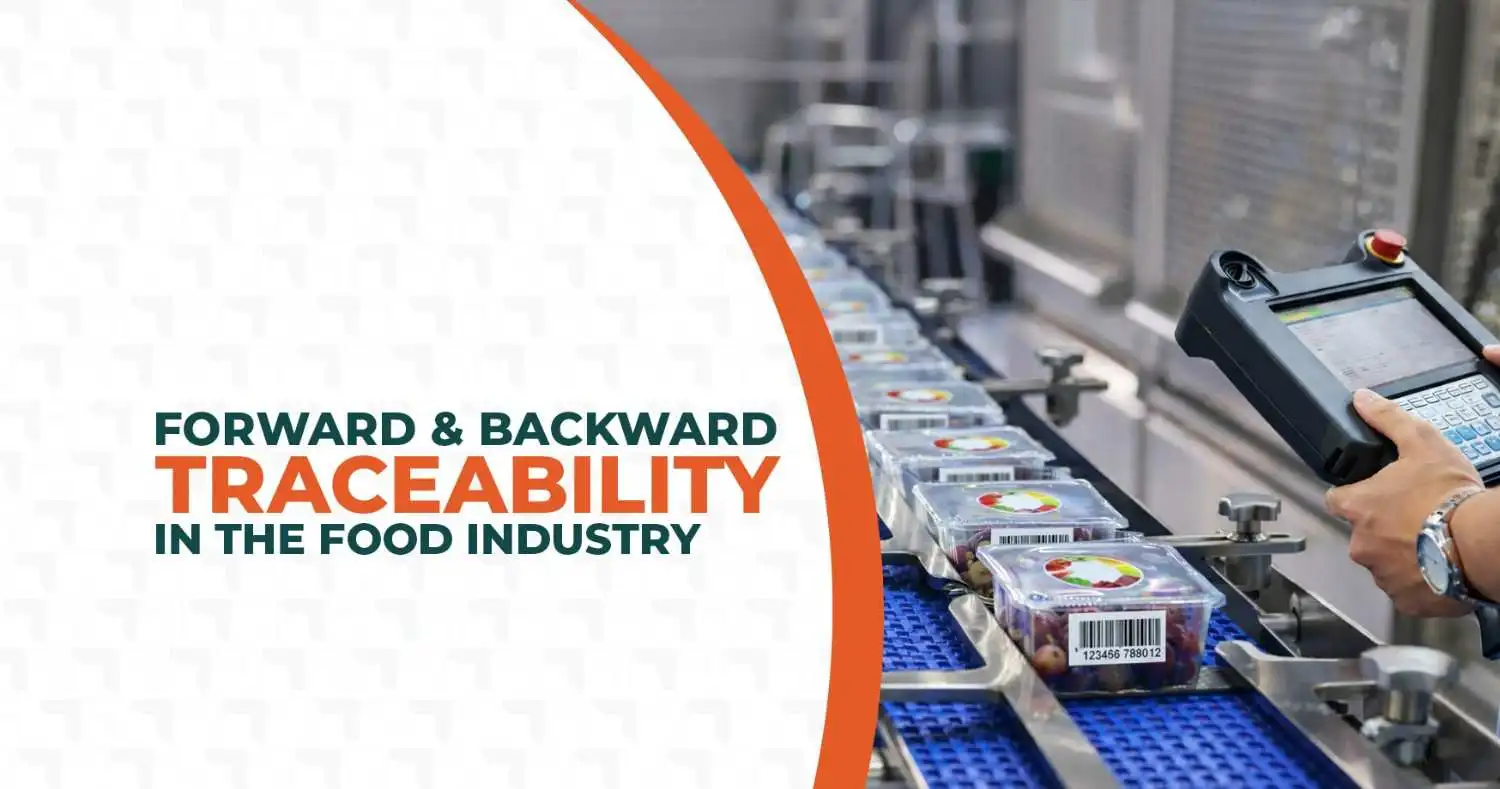
Forward & Backward Traceability in the Food Industry
Forward traceability moves with the product, right from its source through processing and distribution to the consumer. Backward traceability moves in reverse, linking the end product back to its ingredients and suppliers. Together, they create a two-way chain of visibility that speeds recalls and ensures compliance with food safety and authenticity checks.
In an era when consumers expect proof of origin and instant recall responses, forward and backward traceability isn’t just a safeguard, it’s a strategic advantage for the entire food supply chain.
What Are Forward and Backward Traceability?
Before diving into why traceability is mission-critical, let’s understand the two directions that define its scope.
1. Forward Traceability (Downstream Flow)
Forward traceability food systems follow a product’s journey from the point of origin to the final customer. Think of it as tracing the river downstream: raw ingredients enter production, batches are recorded, packaging carries identifiers, distribution logs track shipments, and retailers record final sales.
This downstream view is the backbone of farm-to-fork traceability across the food supply chain, where every handoff from grower to shelf leaves a verifiable record.
For food industry, this direction is vital when a recall is triggered. Instead of pulling every product from shelves, forward traceability ensures you can pinpoint exactly which batches, lots, or shipments are affected. The outcome is less waste, lower recall costs, and less damage to customer trust.
2. Backward Traceability (Upstream Flow)
Backward traceability food works in the opposite direction, and it is the clearest form of upstream food supply chain tracking. If a customer reports contamination, an inspector tests a product, or a retailer flags spoilage, the system traces the product back to its raw material suppliers. During the 2018 United States E. coli outbreak, investigators used backward traceability to follow contaminated romaine lettuce upstream to specific growing regions in Yuma, Arizona, showing how source-level tracing narrows a recall to its true origin.
This is where real problem-solving begins. Backward traceability allows you to quickly identify whether contamination started at a farm, during processing, or in transportation. In industries with complex sourcing like seafood, grains, or ready-to-eat products, backward traceability prevents finger-pointing and delivers clarity during regulatory investigations.
Why Forward and Backward Traceability Matters in the Food Industry?
For decades, traceability was treated as a compliance obligation. Something to show auditors to be precise. Today, it’s a business-critical capability, determining how fast you can respond to disruptions and how much trust your consumers place in your brand.
- Food Safety: Without traceability in food safety, outbreaks spiral out of control. A brand had to recall over 35,000 tonnes of its product from millions of retail outlets. The crisis highlighted that without pinpoint batch-level traceability, a localized safety concern can escalate into a national supply chain shutdown. For any food manufacturer, the faster you isolate contamination sources, the fewer lives and brands are destroyed.
- Regulatory Compliance: Traceability is required to meet regulatory compliance. It ensures that every product can be accurately tracked through the supply chain, providing transparency, accountability, and the ability to respond quickly to recalls or safety issues.
- Efficiency in Recalls: With robust systems, recalls don’t have to be nuclear options. Instead of halting entire product lines, forward traceability food records allow you to remove only affected batches, dramatically cutting costs.
- Supply Chain Transparency: Consumers no longer buy blindly. They want to know where products come from, how they are sourced, and whether they meet ethical and sustainability standards. For manufacturers, clear traceability data lowers compliance risk, improves trust with partners, and supports confidence in the brand across the supply chain.
What are the Benefits of Forward and Backward Food Traceability in Food Industry?
The real cost of poor traceability is observed in wasted product, lost markets, and eroded credibility. Every gap in your traceability chain quietly adds hidden costs: excess recalls, inflated insurance premiums, inefficiencies that compound over time. Strong traceability makes problems smaller, recalls cheaper, and brand damage less permanent.
- Faster Root Cause Identification: Backward traceability allows teams to trace an issue directly to its source, whether it is a supplier, a processing step, or a production batch. Investigations that once stretched for days or weeks can now be resolved within hours. This reduces downtime and limits operational disruption.
- Targeted Recall Execution: Forward traceability makes it possible to recall only the affected units instead of pulling entire product lines. Specific batches can be isolated and removed without stopping production. This cuts wastage, reduces financial loss, and keeps unaffected inventory moving through the supply chain.
- Stronger Buyer and Partner Confidence: Large buyers, export markets, and retail chains increasingly evaluate suppliers based on traceability readiness. Manufacturers with reliable records and audit ready data face fewer objections during onboarding and renewal discussions.
- Operational Efficiency: When traceability is integrated with supply chain automation, manual record keeping drops sharply. Data flows automatically across production, warehousing, and logistics. Errors reduce, coordination improves, and teams gain tighter inventory control, lower spoilage, and more predictable planning across shop floors and distribution networks.
- Reduced Long Term Brand Exposure: When issues occur, companies with structured traceability respond with clarity and speed. This limits public fallout, reassures stakeholders, and prevents single incidents from turning into long term brand damage.
BCI's Track and Trace solution applies Serialization and Aggregation to build parent-child links across primary, secondary, tertiary and shipper packs, so a single scan can follow the batch genealogy in either direction. This supports batch-level traceability from raw materials to finished goods and efficient recall management, letting food manufacturers isolate only the affected lots instead of pulling an entire product line.
Technologies Powering Food Traceability
Food supply chain tracking doesn't fail because of missing data, it fails when that data can't move fast enough to answer who, where, and how. The real test for businesses is whether their systems can transform scattered records into a single, defensible truth. Technology here isn't an add-on; it's the only way to keep pace with the speed, scale, and scrutiny of modern food supply chains.
- Barcodes & QR Codes: Barcodes are the entry-level identifiers. A simple scan links a product to its batch, origin, or destination. For many companies, this is the first step toward traceability because it’s cost efficient, dynamic, and easy to apply on packaging.
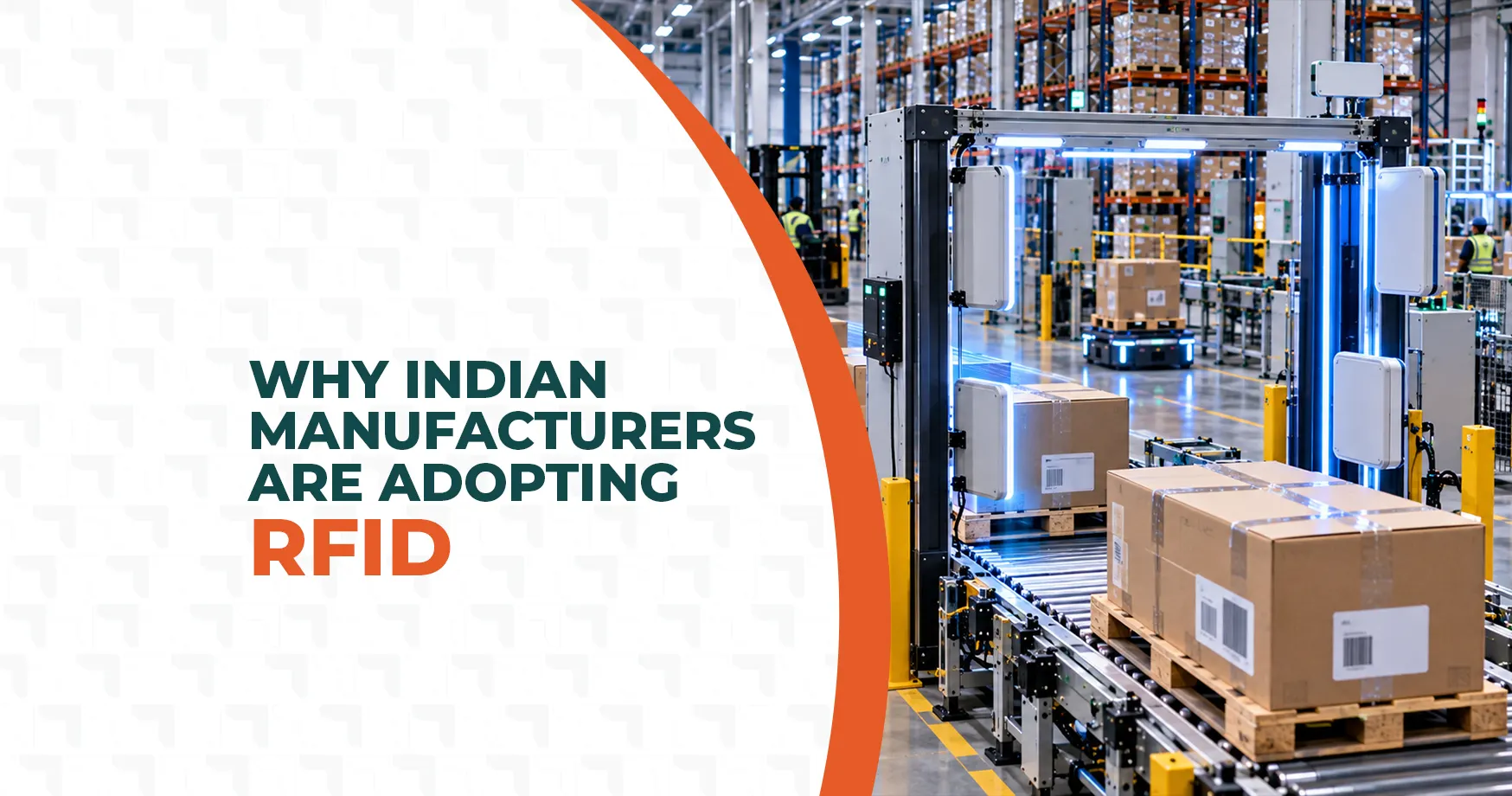
- RFID Technology: Radio Frequency Identification enables automated scanning and real-time tracking of bulk shipments without manual intervention. See our page on RFID Technology for a deeper dive.
- Cloud Platforms: Traceability falls apart if every node in the supply chain keeps its own siloed database. Cloud-based systems create one centralized record where manufacturers can feed data, so everyone is looking at the same version of the truth.
- IoT & Sensors: Traceability isn’t only about location; it’s also about condition. IoT devices like Senskon monitor temperature, humidity, and even shock events during transport. This is crucial in cold chains, where a few degrees of fluctuation can determine whether a shipment is safe or spoiled. Explore what are temperature sensors for better application understanding of the said technology.
What’s notable is how these technologies no longer operate in isolation. Modern traceability technologies in food manufacturings integrate into ERP and warehouse management systems, turning fragmented data into a continuous digital story of the product.
The same integration logic underpins broader traceability in manufacturing operations, where shop floor data and supply chain records converge into one connected record.
Future Trends in Food Traceability
What was once seen as a compliance expense is turning into a currency of credibility. In the coming years, traceability will decide not just which products make it to market, but which brands consumers are willing to stand behind.
- AI-Enabled Predictive Analytics: Future systems won’t just react to contamination but will flag potential risks based on supplier history, environmental conditions, or logistics delays.
- IoT Ecosystems: End-to-end monitoring across fleets, warehouses, and retail shelves ensures real-time visibility. Perishables will no longer be at mercy of blind logistics.
- Digital Twins: Virtual models of supply chains simulate disruptions, allowing companies to stress-test their resilience before crises strike.
Traceability is shifting from being a safety net to becoming a lever of power in the food business. Those who adopt it early won’t just cut recall losses, they’ll reshape customer expectations, setting a standard that competitors will be forced to follow.
Conclusion
Traceability has outgrown its role as a compliance checkbox.
For the food industry, it signals a shift toward smarter, more accountable supply chains where speed, accuracy, and visibility are non-negotiable.
For people, it promises safer plates, greater transparency, and the assurance that what they consume aligns with the highest standards.
And for Bar Code India (BCI), it represents both a responsibility and an opportunity: to power this transition with advanced traceability technologies, from RFID and IoT sensors to end-to-end digital platforms.
The future of food isn’t just about producing more; it’s about producing responsibly, tracing confidently, and building trust that lasts. Explore our Trace and Track System to see how Bar Code India is supporting the technological advancement of forward and backward traceability in the food industry.