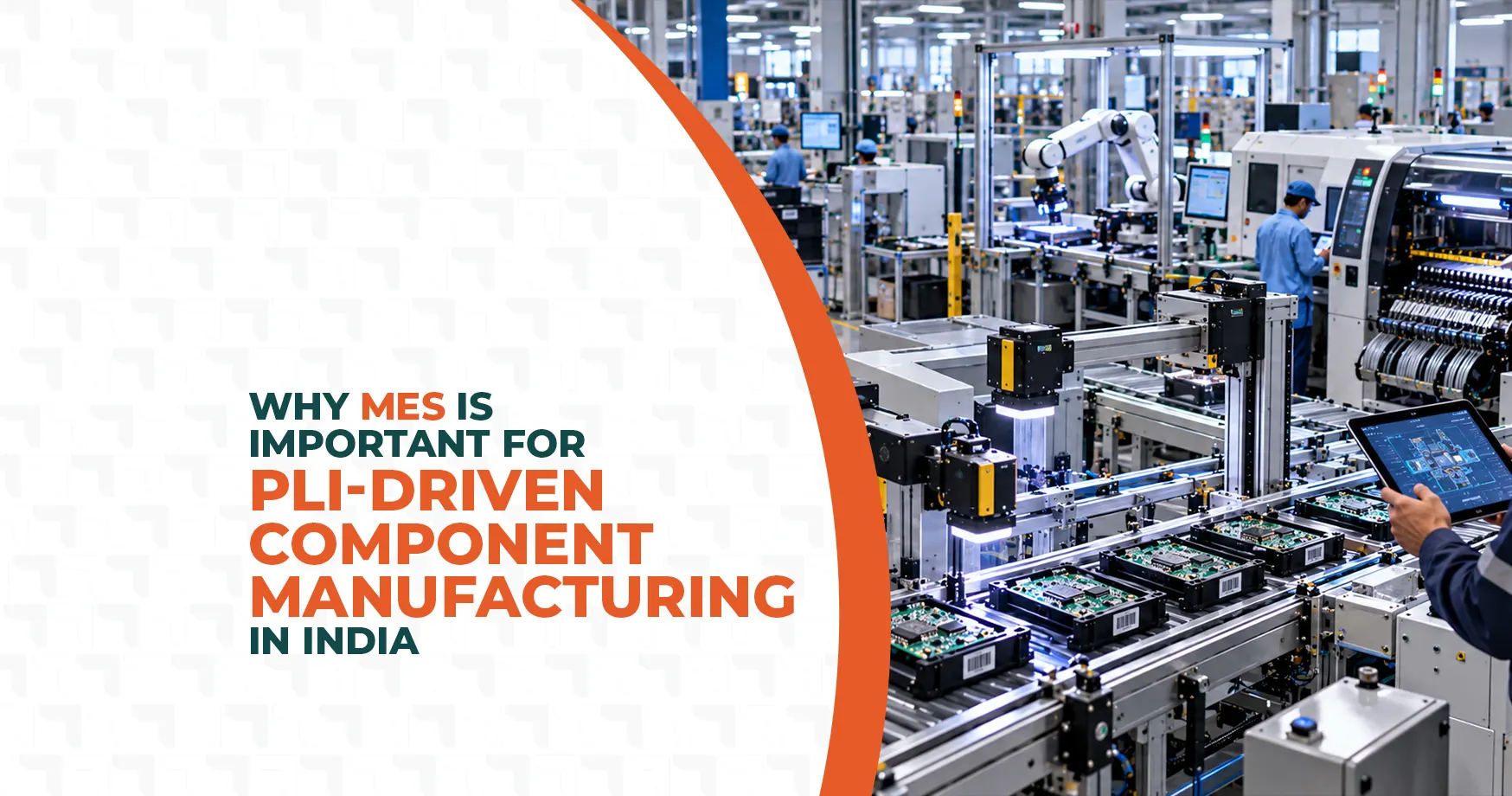


Automated Quality Inspection for Consistent Manufacturing Quality
In manufacturing today, delivering consistent product quality isn’t just an expectation, but an obligation.
As production speed and complexity increase, manual inspection methods often struggle to deliver the precision consistently. Industry Research suggests that manual inspection fails to detect the defects between 20 and 30 per cent of the time when scaled across large batches and multi-shift operations.
This is where automated quality inspection makes a difference. It transforms quality control into a seamless, real-time function built on advanced automation technology.
What is Automated Quality Inspection?
Automated quality inspection refers to the use of advanced vision inspection systems to automatically check product quality throughout the manufacturing process. Instead of relying on human inspection, automated systems use cameras and sensors integrated with AI capabilities to detect defects, verify labels, and ensure every product meets set quality standards.
Automated Quality Inspection in Manufacturing with Machine Vision
Machine Vision uses vision systems and sensors to inspect products for visual and structural accuracy. These systems capture images of products on the line and analyze them in real time to detect surface defects, verify printed information such as batch or expiry dates, and assess label or packaging quality.
By integrating AI and machine learning, Machine Vision enhances automated inspection accuracy and speed. This shift toward AI quality inspection allows models to learn continuously from captured data, improving defect detection performance and making inspections more adaptive and reliable across diverse manufacturing environments.
Automated Defect Detection Use Cases in Vision Inspection Systems
Automated defect detection through a modern vision inspection system supports a wide range of practical applications across manufacturing, powering critical quality functions such as:
1- Surface defect detection, code verification, and label inspection:
Ensures every product adheres to defined quality parameters and brand standards.
2- Dimensional measurement, shape validation, and assembly checks:
Guarantees assembly precision and proper component alignment.
3- Automated removal of defective items from the line:
Works seamlessly with rejection systems to eliminate faulty items before packaging or dispatch.
4- Enhanced imaging:
Delivers consistent inspection accuracy across changing conditions.
5- OCR and OCV validation:
Captures and verifies human-readable information printed on packs and labels to maintain accuracy during serialization.
Each of these applications serves a shared purpose, helping manufacturers achieve consistent quality, minimize rework, and stay aligned with strict industry compliance.
Industry-based Application
BCI’s machine vision–enabled inspection systems are being applied across diverse industrial environments where reliability, traceability, and compliance are paramount:
1. Pharmaceuticals & Life Sciences
- Serialization and traceability: Verifies unique identification codes to ensure product authenticity and compliance with global mandates.
- Label verification: Checks printed data like batch numbers, expiry dates, and barcodes for accuracy and legibility.
- Packaging integrity: Detects missing labels, tamper issues, or sealing errors to prevent non-compliant shipments.
- Regulatory compliance: Helps maintain adherence to strict pharmaceutical labelling and packaging regulations.
2. Fast-Moving Consumer Goods (FMCG)
- High-speed inspection: Performs real-time defect and labeling checks on fast production lines without slowing throughput.
- Label and print accuracy: Ensures correct branding, barcodes, and packaging designs across multiple SKUs.
- Packaging consistency: Detects deformities or misaligned seals to enhance shelf-quality and brand integrity.
- Defect elimination: Removes non-conforming products automatically, reducing waste and rework.
3. Automotive
- Component inspection: Detects scratches, cracks, and surface defects in metal or plastic components.
- Marking and code verification: Confirms that part markings and serial codes are correct and traceable.
- Assembly accuracy: Validates correct alignment, positioning, and fitment of parts to ensure performance reliability.
- Process traceability: Links inspection results to manufacturing stages for root-cause analysis.
Download Case Study: Check out how BCI’s Machine Vision solution has helped one of India’s leading automotive brands.
4. Electronics
- PCB and solder inspection: Identifies soldering defects, missing components, or polarity issues during assembly.
- Alignment precision: Verifies exact placement of micro-components critical to device performance.
- Barcode and mark verification: Ensures traceability through accurate data capture of serials and component IDs.
- Quality assurance: Reduces defects that can lead to costly recalls or device malfunction.
5. Process Manufacturing
- Fill-level inspection: Monitors liquid or product fill to ensure consistency in every container.
- Seal and cap integrity: Detects loose, missing, or faulty seals that may compromise safety.
- Label compliance: Checks for correct ingredient lists, batch information, and expiration details.
- Regulatory assurance: Helps manufacturers meet hygiene, safety, and labeling standards in highly regulated environments.
Across these industries, automated inspection powered by BCI’s Machine Vision strengthens both product quality and compliant traceability. It helps to ensure that every item meets brand and compliance expectations before it reaches the market.
Benefits of Machine Vision Inspection Systems
BCI’s Machine Vision (MV) systems go beyond basic inspection — they drive measurable business outcomes across manufacturing and supply chain operations.
1. Enhanced Product Quality and Brand Integrity
Ensures complete visual inspection accuracy, reducing human dependency and preventing defective items from reaching customers.
Protects brand reputation through consistent product quality and packaging compliance.
2. Regulatory Compliance and Traceability
Supports industry-specific regulatory needs (like serialization and labeling compliance in pharma).
3. Operational Efficiency and Cost Reduction
Accelerates inspection speed and reduces downtime by automating quality checks.
Minimizes material wastage and rework through early defect detection and automated rejection.
4. Data-Driven Quality Insights
Enables predictive quality analysis by turning inspection into a proactive quality management tool.
5. Scalability Across Industries
Flexible architecture designed for varied sectors like pharmaceuticals, FMCG, automotive, electronics, and process manufacturing. It ensures fast adaptation to different line configurations and inspection criteria.
Shaping a Data-Driven Quality Future
Automated quality inspection powered by Machine Vision represents more than a technical shift; it’s a mindset change. It transforms inspection from a reactive task into a proactive, intelligent system that continuously contributes to better production outcomes.
By integrating vision-driven inspection with digital manufacturing solutions, businesses gain a powerful advantage: real-time quality visibility, traceable compliance, and data-backed improvement.