
What is RFID?
RFID is an automatic identification and data capture technology that links a physical item to a digital identity and transmits that identity over a radio frequency signal. Unlike a barcode, which has to be visually aligned with a scanner, an RFID tag can be read through packaging, cartons, and clothing, and multiple tags can be read at the same time.
An RFID system has three functional components that work together.
- A tag combines a microchip and an antenna, attaches to the item being tracked, and stores the unique identifier along with any additional data such as batch number or product attributes.
- An RFID reader emits a radio frequency field, activates tags within range, and decodes their transmissions, either fixed in position at a dock door or conveyor line, or carried as a handheld scanner for cycle counts and audits.
- A backend software translates the raw tag reads into structured operational events, filters out duplicate or ghost reads, and pushes the clean data into enterprise systems such as ERP, WMS, MES, and POS platforms.
Such capabilities makes RFID particularly suited to environments where speed, accuracy, and continuous visibility shape operational performance of the concerned supply chain; including high-volume warehouses, omnichannel retail floors, manufacturing lines, healthcare facilities, and logistics yards.
Core Components and Types of RFID
Before choosing an RFID solution, supply chain leaders and retail operators must understand the building blocks of the technology. This clarity helps evaluate accuracy, read range, data capture speed, interoperability and integration requirements.
An RFID system typically combines RFID tags, readers, antennas and software or middleware. Each component has a specific role: the tag stores the identification data, the antenna establishes communication between the tag and reader, the reader captures the response, and the software converts those reads into usable operational events.
BCI’s RFID portfolio aligns with these components, offering enterprise grade tags, fixed and handheld readers, middleware and integration services for high throughput environments.
Types of RFID Systems
RFID systems differ mainly by their frequency band and power source. These choices directly influence read range, interference resistance and tag cost.
1. Passive RFID
Passive tags do not contain a battery. They draw energy from the electromagnetic field transmitted by the reader. This makes them cost efficient and suited for large volume deployments.
a. Low Frequency
Operates around 125 kilohertz. Works well for applications requiring strong penetration through materials such as liquids or metal surfaces. Used for animal ID, access control tokens and specialty industrial environments.
b. High Frequency
Operates at 13.56 megahertz. More data capacity compared to low frequency and stable performance in shorter range scenarios like asset authentication and secure payments. This band powers numerous retail and library systems along with NFC based interactions.
c. Ultra High Frequency
Operates between 860 and 960 megahertz. Offers faster data transmission and long read ranges. This is the preferred band for supply chain, warehouse, logistics, apparel retail and vehicle movement applications because UHF tags support bulk reading and high speed scanning.
For enterprise deployments, frequency selection also needs to account for the applicable regional regulations and RFID standards. Standards such as EPC UHF Gen2 and ISO/IEC 18000-63 are important for interoperability between compatible tags, readers and supply chain systems.
2. Active RFID
Active tags contain an internal battery. This allows them to broadcast signals rather than wait for the reader to energise them.
a. High Range Active Systems
These systems support real time location tracking across large facilities such as yards, plants and hospitals. They are used for vehicle tracking, high value equipment monitoring and environment sensitive cargo.
b. Battery-Powered Tags
These tags ensure consistent signal strength and high reliability in demanding conditions. The tradeoff is higher unit cost and maintenance for battery replacement.
BCI supports active RFID for applications that require real time asset movement visibility or safety monitoring within manufacturing environments.
RFID Readers
Readers determine how data flows in operational environments. They influence accuracy, range, scanning speed and how efficiently teams can execute audits or track movement.
RFID Antennas
RFID antennas transmit the radio frequency signal that communicates with tags and receive the response returned by those tags. Antenna design, orientation and placement directly affect read range and reliability, particularly in environments containing metal racks, liquids, machinery or high tag density.
Antennas may be integrated into a reader or installed separately at locations such as dock doors, conveyor lines, portals and other controlled read zones.
BCI offers handheld, fixed and integrated reader systems coupled with middleware that syncs captured data with ERP, WMS and POS systems.
1. Handheld Readers
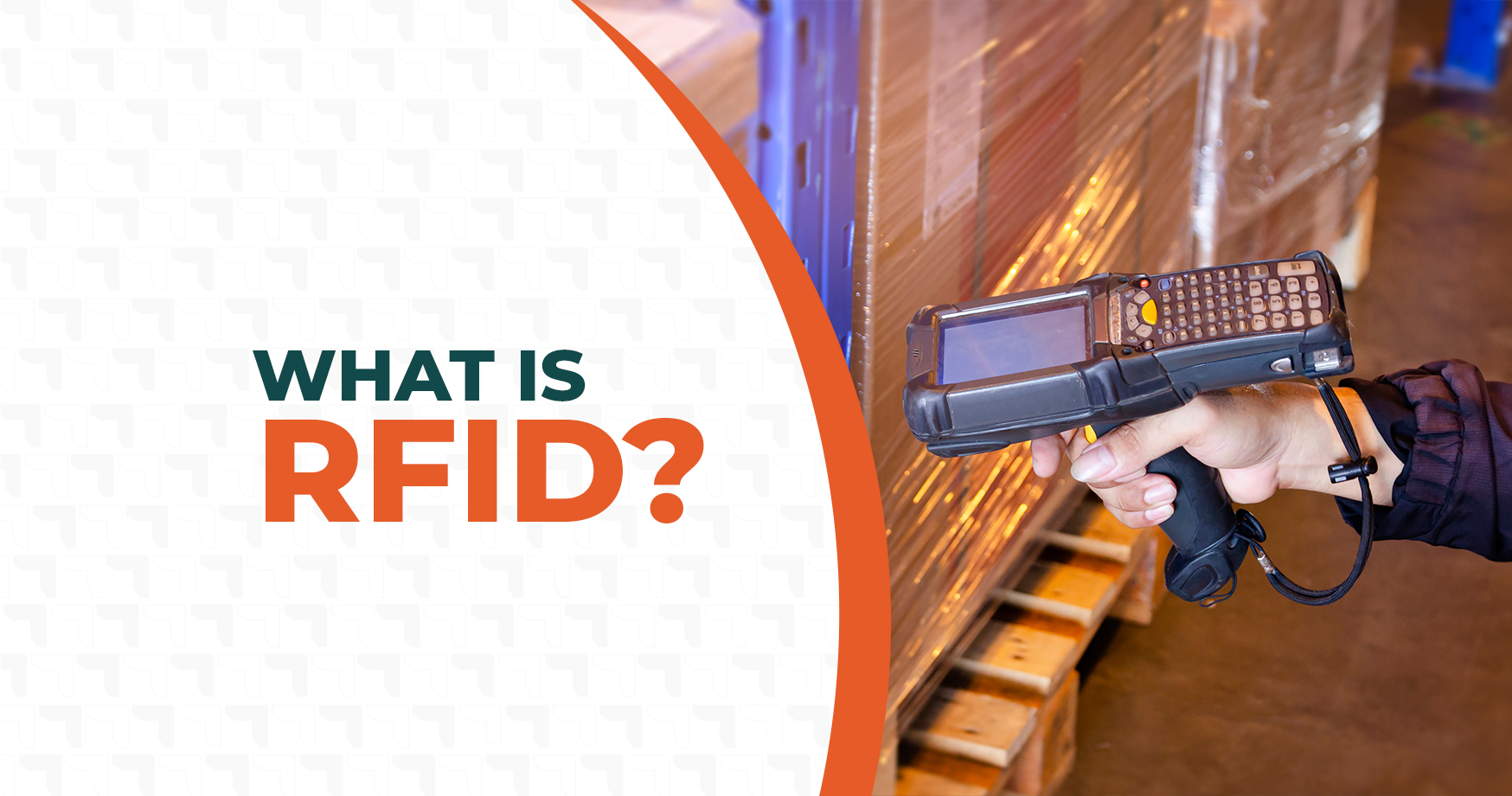
Handheld devices enable mobile scanning. They support real time audits, item level reconciliation and cycle counts. In retail stores, staff can scan hundreds of items quickly, reducing manual labor. In warehouses, handhelds help teams validate pick lists and confirm order accuracy.
2. Fixed Readers
Fixed readers create automated capture points. Mounted at dock doors, warehouse gates, conveyor lines or production stages, they detect tags as items move through facilities. This setup reduces dependency on manual scans and increases traceability during receiving, staging and shipping.
3. Integrated Readers
Integrated readers are embedded inside shelves, cabinets, equipment or portals. These setups continuously monitor items without user intervention. Integrated readers are common in smart shelves, pharmaceutical cabinets and automated tools check in and check out systems.
RFID Tags
Tags are the identifiers that carry the encoded digital information. Their construction affects durability, range, orientation sensitivity and read performance in different environments.
BCI offers a wide range of tags suitable for cartons, apparel, metal surfaces, liquids, returnable assets, pallets and high value equipment.
1. Passive Tags
These tags use the reader signal as their power source. They are affordable and ideal for large scale tagging in inventory intensive workflows.
2. Active Tags
Active tags include a battery. They offer longer ranges and more consistent performance. They are used for tracking vehicles, medical equipment, containers and assets that require continuous visibility.
Where RFID is used across industries
RFID adoption grows where organisations need faster identification, real-time movement tracking, and automated data collection. The value lies in improving throughput, reducing human error, and enabling continuous visibility at the item, case, or asset level. The seven sectors below cover the highest-volume RFID deployments seen in the Indian and global markets.
Supply chain and warehousing
RFID improves material flow and stock accuracy from inbound to outbound. Teams confirm receiving without manual barcode scanning, reduce audit time, validate shipments automatically at dock doors, and detect discrepancies early in the fulfilment cycle. UHF-based systems support bulk reads on pallets and cartons, which is why RFID is now central in distribution centres built around fast replenishment and omnichannel order processing.
A consumer durables manufacturer reached 99% inventory visibility using a warehouse automation deployment that combined RFID-based identification with cycle counting and reconciliation workflows.
Retail and omnichannel operations
Retailers use RFID to maintain accurate on-shelf availability, reduce shrinkage, accelerate cycle counts, and enable automated checkout environments. Smart shelves, fitting room readers, and backroom portals give store teams a clear view of stock movement without manual intervention. The same data layer supports replenishment efficiency and high-accuracy product availability across both store and online orders.
A live example is the H&M dispatch validation deployment, which reached 100% dispatch accuracy by combining RFID-based item identification with automated validation at the dock, replacing a process that previously depended on manual checks.
Manufacturing and industrial plants
RFID validates assembly sequence, tracks parts through production stages, and ensures the right components reach the correct workstation. Active and ruggedised tags monitor tools, containers, and work-in-progress units across automotive, electronics, and heavy engineering plants. The technology also improves traceability for quality control and regulatory compliance by maintaining a consistent digital record of component movement.
A top Indian ignition system manufacturer reached 100% traceability compliance in PCB manufacturing using RFID-driven serialisation through every production stage, supporting both internal quality control and OEM audit requirements.
Healthcare and pharmaceutical systems
Hospitals and healthcare facilities rely on RFID to track medical equipment, monitor consumables, verify drug authenticity, and ensure proper patient identification. RFID-enabled cabinets record each withdrawal automatically, which reduces manual documentation and flags unusual activity. Real-time tracking of high-value clinical assets reduces loss, accelerates turnaround, and supports safety protocols. In pharmaceutical operations, batch-level RFID tagging supports compliance with serialisation and anti-counterfeiting regulations that govern the industry globally.
Security, access, and authentication
RFID badges and access cards manage entry control while creating audit trails for compliance and visitor management. The technology supports secure payments, controlled area access, parking management, and asset authentication in corporate, hospitality, and institutional environments. Encryption and password protection on RFID chips make them suited to secure applications where identity verification matters.
Logistics, transportation, and transit systems
RFID increases visibility across multi-node logistics networks. Readers placed at gates, yards, cross docks, and transport hubs provide real-time visibility of cargo movement. Toll systems, weighbridges, and fleet checkpoints also use RFID to reduce congestion and automate payment events. The scale at which this is now deployed in India is visible in the NETC toll collection programme, which uses RFID-based vehicle identification to enable cashless toll payments at thousands of plazas.
Public infrastructure and everyday applications
RFID is embedded in library systems, event ticketing, airline baggage handling, rental equipment tracking, and public transit cards. These applications demonstrate the versatility of the technology and its ability to scale across millions of daily scans. The same identification logic that supports a metro card or a hotel key card also supports the warehouse pallet tag and the manufacturing tool tag.
RFID History
RFID originated from identification systems developed for military aircraft during the Second World War. The technology matured through industrial automation, logistics and retail as tag costs dropped and reader performance improved. Today RFID plays a central role in digital transformation initiatives across global supply chains and modern retail ecosystems.
How RFID Technology Works in Industrial and Enterprise Environments
RFID functions through controlled radio communication between a tag and a reader. Each stage in the workflow influences accuracy, read range and data reliability. The following breakdown presents the operational flow in a format that supports evaluation, comparison and decision making.
Step 1: Attach a Tag
Every tracked item receives an RFID tag. This tag becomes the item’s digital identity and stays associated with it throughout storage, movement, and processing.
Unique identification
Each tag contains an identifier that allows the RFID system to distinguish one tagged item from another. Depending on the tag and application, additional memory can store product, batch, asset or process information.
Tag selection depends on the environment
The tag must also be matched to the material and operating conditions of the item. Metal surfaces, liquids, temperature, exposure to chemicals and required read distance can all affect tag performance.
Attachment quality impacts performance
- Placement near metal, liquids, or edges can detune the antenna.
- Adhesive strength and label thickness influence stability in high-speed conveyor environments.
- Poor placement leads to inconsistent reads.
At this stage, deployment quality begins. Tag choice and placement determine long-term reliability.
Step 2: Activate the Tag
Once tagged, the item enters a radio frequency field generated by an RFID reader. The reader uses its antenna to transmit the RF signal into the defined read zone. A passive tag receives energy from this field and uses it to power its chip and respond. Active tags use their internal battery, while semi passive tags use their battery for internal functions but still depend on the reader for communication.
Power source
- Passive tags draw energy directly from the reader signal.
- Active tags use internal batteries, enabling longer read ranges and stronger transmission.
Read zone design
- Antenna layout determines how evenly the RF field spreads.
- Reflections from metal racks, shelving, or machinery can create blind spots or over-reads.
- High-volume warehouses often deploy antenna arrays to maintain consistent activation during peak throughput.
Activation depends on engineered field design and environmental conditions.
Step 3: Tag Response
After activation, the tag transmits encoded data back to the reader. This happens within milliseconds and requires controlled signal handling. In many passive UHF RFID systems, the tag communicates using backscatter. Instead of generating a continuous radio transmission of its own, the tag changes the characteristics of the incoming RF field so the reader can detect and decode its response.
Communication method
- Tags use backscatter modulation to send their identifier.
Reader performance
- Industrial-grade readers process hundreds of tag reads per second.
Accuracy depends on
- Tag orientation
- Reader sensitivity
- Antenna gain
- Environmental radio noise
When multiple tags are within the same read zone, the reader also needs to distinguish their responses so that each tag can be identified separately. This enables bulk reading without treating several tagged items as a single event.
This step enables:
- Rapid pallet identification
- Automated apparel counts
- Continuous tracking across docks and production lines
System reliability here determines operational trust in the technology.
Step 4: Data Capture
The reader decodes the returning signal and extracts the tag information. Operational context is then added to create meaningful data.
What happens at this stage:
- The reader collects the unique identifier and any additional stored memory data.
- Time stamps, antenna location, and event markers are attached.
- Each read becomes a structured movement record.
Operational impact
Retail:
- Verifies shelf availability
- Identifies replenishment triggers
- Improves cycle count accuracy
Supply chain:
- Confirms pallet verification
- Detects dock door movements
- Flags exceptions
Advanced filtering logic removes duplicate or ghost reads that occur in reflective or high-density environments. Without filtering, data noise increases and system trust declines.
Step 5: Process Data
Captured data flows into enterprise systems that drive operational control and visibility. Processing objectives include:
- ERP, WMS, and TMS systems update inventory levels and confirm order accuracy.
- Manufacturers validate part lineage, traceability, and workstation performance.
- Retail managers use real-time visibility for automated replenishment and shrink detection.
- Historical data supports slotting optimization, route validation, and demand planning.
At this stage, RFID shifts from identification to decision-making.
Device-Level Intelligence
Bar Code India Ltd. enhances this final stage through DRISTI readers, which process data at the device level before transmitting it to cloud systems.
Instead of forwarding raw signals:
- Noise is filtered locally.
- Events are validated.
- Structured data is transmitted to control towers in real time.
This approach reduces latency and improves decision accuracy across warehouse and supply chain operations.
Real World Examples of Radio Frequency Identification (RFID)
RFID is used across sectors where high accuracy, continuous identification and automated data capture are essential. The following examples highlight how the technology functions within operational environments and why it has become a preferred choice for businesses that require greater visibility and reliable process control.
1. Pet Microchips
RFID microchips in pets function as permanent digital identifiers.
They store the animal’s unique ID and link to a database that includes ownership information and medical history.
Operational advantages:
- Shelters and veterinary clinics can quickly identify lost pets by scanning their chips.
- The system does not require an external power source because these chips operate as passive tags.
- Data reliability is high because each chip contains a globally unique identifier.
This model mirrors the asset identification logic used in industrial and logistics equipment tagging.
2. Store Alarm Tags
Retailers use RFID tags for electronic article surveillance to reduce shrinkage and strengthen store protection.
Key technical behaviours:
- Tags are encoded with an EPC that is detected by gate readers during exit.
- Readers monitor signal presence and trigger alerts when an active tag passes without being deactivated.
- The process supports fast checkout operations and does not depend on direct line of sight.
3. Room Keys in Hotels
RFID enabled room keys provide secure and contactless guest access.
Functional features:
- Each key card contains an RFID chip that stores access permissions.
- Door readers authenticate the card and log each entry event for audit purposes.
- Card credentials can be reset instantly which reduces security risks associated with lost keys.
The same system design principle is used in supply chain access control for dock doors, restricted inventory zones and equipment bays.
4. Portable Heart Monitors
Healthcare providers use RFID in portable heart monitoring devices to track patient movement and associate biometric readings with device activity.
Core operational benefits:
- RFID links patient identity to monitoring hardware without manual input.
- Staff can locate devices quickly using RFID readers, improving equipment utilisation.
- Real time identification ensures that the correct device is matched with the correct patient.
These mechanisms resemble the high reliability tracking used in pharmaceutical cold chains and critical asset management.
5. Attendance Tracking
Educational institutions and large organisations rely on RFID for automated attendance logging.
Process insights:
- Personnel carry RFID enabled ID cards that trigger check in events when detected by readers at entry points.
- Systems record time stamps, identity and entry location without manual scanning.
- This eliminates clerical errors and reduces administrative overhead.
The same event capture model supports warehouse personnel tracking, forklift authentication and controlled zone access in manufacturing plants.
6. Race Timing
Competitive races use RFID to identify participants and record timing with high precision.
How the system operates:
- Runners wear RFID tags embedded in bibs or shoes.
- Antennas placed at checkpoints and finish lines detect each tag in milliseconds.
- Data flows to timing systems that calculate lap times, ranking and performance analytics.
This high density tag reading technique parallels conveyor based item movement in distribution centres.
7. Electronic Toll Collection
Highway tolling systems rely on RFID tags to enable cashless and contactless toll payments.
Operational behaviours:
- Vehicles carry windshield tags encoded with customer or vehicle identities.
- Overhead or side mounted readers detect the tag as the vehicle passes through the toll zone.
- The system deducts the amount from the linked account and logs the transaction instantly.
The same infrastructure design is adapted to yard management, gate automation and automated inbound receiving in supply chain networks.
What Are RFID Tags and Smart Labels?
RFID tags and smart labels form the core identification layer in any RFID system. They carry the digital identity of an item and enable automated data capture without human scanning or visual alignment. This makes them essential for environments where accuracy, speed and traceability directly influence operational costs and service quality.
The following breakdown clarifies their construction, performance characteristics and business relevance.
1. RFID Tags
RFID tags contain a microchip and antenna that store and transmit data when activated by a reader. They operate in different frequency bands such as LF, HF and UHF, each suited to specific environments.
Key characteristics:
1. Two Power Models
- Passive tags draw energy from the reader field and support low cost, high volume deployments in distribution centres and retail floors.
- Active tags use internal batteries, enabling longer read ranges for high mobility assets such as returnable containers, vehicles and medical equipment.
2. Form Factors for Varied Operating Conditions
- Hard tags support industrial or outdoor use, including manufacturing plants, automotive components, metal surfaces and rugged supply chain equipment.
- Flexible inlays and label form factors are designed for cartons, apparel, serialized items and packaged goods.
3. Remote and Fast Identification
Tags transmit their identifier in milliseconds, allowing hundreds of items to be captured simultaneously. This supports automated receiving, real time stock validation and pallet verification at scale.
4. Compatibility with Enterprise Systems
RFID tags feed data directly into WMS, OMS, ERP and analytics layers, enabling traceability, replenishment logic and exception handling without manual scanning.
BCI provides a wide portfolio of application specific tags that support both high volume retail operations and harsh industrial deployments, complemented by hardware such as DRISTI readers and enterprise grade printers.
2. Smart Labels
Smart labels combine an RFID inlay with printed information to create a unified identification layer that works in barcode based as well as RFID enabled workflows.
Functional advantages:
1. Dual Data Format
Each label contains:
- An embedded RFID inlay for automated capture
- A printed barcode and human readable text for visual and scanner based processes
This allows businesses to migrate toward RFID without disrupting existing procedures.
2. Flexible and Easy to Apply
Smart labels can be attached to apparel, electronics, packaged goods, cartons and retail merchandise. Their thin construction makes them compatible with standard label applicators and print and apply systems.
3. Inventory and Merchandising Efficiency
Teams can conduct rapid cycle counts, prevent stockouts, verify orders and maintain shelf accuracy using handheld or fixed readers. Smart labels are widely deployed across retail, FMCG and e commerce operations for this reason.
4. Supports Real Time Tracking and Event Logging
Event data from each label updates central systems with item location, movement and transaction history, strengthening visibility across supply chain nodes.
RFID tags and smart labels expand identification capabilities beyond the limitations of manual scanning. They improve operational accuracy, reduce handling time and create the foundation for real time visibility.
Key Takeaways
- RFID enables contactless, fast, and accurate identification of items.
- It improves supply chain visibility, inventory accuracy, and process control.
- Passive tags are suited for disposable tracking, active tags for high-value assets.
- UHF RFID is the dominant frequency in logistics and retail operations.
- Readers can be mobile, fixed, or embedded based on use case.
- BCI provides complete RFID ecosystems tailored to high-volume, high-variance environments.