
Why MES Matters for PLI-Driven Component Manufacturing in India
PLI programs have changed the game for Indian electronics manufacturers. They have also raised the bar for data accuracy, traceability, and audit readiness.
For component manufacturers, this is where MES (Manufacturing Execution System) becomes essential. It connects shop-floor activity with business systems and turns production events into reliable records.
Why PLI Compliance Needs Shop-Floor Accuracy
PLI rewards measurable production outcomes. That means manufacturers need accurate records of output, material usage, labour activity, and quality performance.
Manual logs make that difficult. MES captures real-time data from machines, operators, and systems, which gives manufacturers a clearer view of what is happening on the floor.
The data trail matters
PLI-linked claims depend on records that auditors can verify. MES systems help by tracking work orders, machine performance, material usage, labour productivity, and quality parameters in one system.
That makes MES systems more than an operations tool. It becomes part of the compliance backbone.
How MES Supports Component Manufacturing
Component manufacturing is highly detail-driven. Small errors can affect traceability, quality, and reporting.
MES is built for that environment. It monitors, tracks, documents, and controls each step of production, from raw materials to finished products.
In BCI MES solutions, manufacturers get features such as:
- Real-time tracking of the 4Ms: Man, Machine, Method, and Material.
- Real-time validations, including routing adherence and sequential control.
- Batch, lot, and component-level traceability.
- Genealogy mapping and traceability records.
- Integrated quality checks and system-driven rework.
- Root-cause analysis for quality issues.
- Production planning and scheduling.
- Alert-based decision-making for rework and quality deviations.
- Seamless two-way integration with ERP, shop-floor machines, PLCs, SCADA, and AIDC hardware such as barcode scanners and RFID readers.
- Cloud-ready or on-prem deployment options.
- User-friendly access through mobile, web, and Android platforms.
These capabilities support both discrete and process environments, including electronics manufacturing.
Why Traceability Is Central to PLI Success
Traceability is not optional in modern manufacturing. It is central to compliance, quality, and audit readiness.
MES system gives manufacturers complete visibility into a product’s journey across the production line. It captures the materials used, the machines involved, and the personnel managing each step.
That matters in component manufacturing because every batch must be defensible. When quality teams or auditors need answers, MES provides the production records they need to review.
What this means on the floor
With MES in place, manufacturers can:
- Track component movement at every stage.
- Maintain production records with real-time validations.
- Support faster root-cause analysis.
- Improve accountability and product integrity.
This is why track and traceability is such a strong fit for PLI-driven operations.
Where Barcode and RFID Infrastructure Fit In
MES depends on reliable input. That input starts with barcode and RFID capture.
BCI supports that layer with solutions and technologies built for industrial environments. Fixed Mount Barcode Readers are designed for high-volume automated reading and integrate with manufacturing solutions.
Barcode scanners, RFID readers, printers, and related devices help capture the physical events that feed MES records.
In practice, this means:
- Barcode scans can record material intake and movement.
- RFID reads can support automated tracking at transition points.
- Labelling can support identification across reels, trays, batches, and assemblies.
When scan coverage is incomplete, the record chain breaks. That creates gaps in compliance reporting and traceability.
MES Use Cases in Component Manufacturing
MES helps across the production flow. The use cases are especially strong in electronics and related component manufacturing.
PCB and electronics assembly
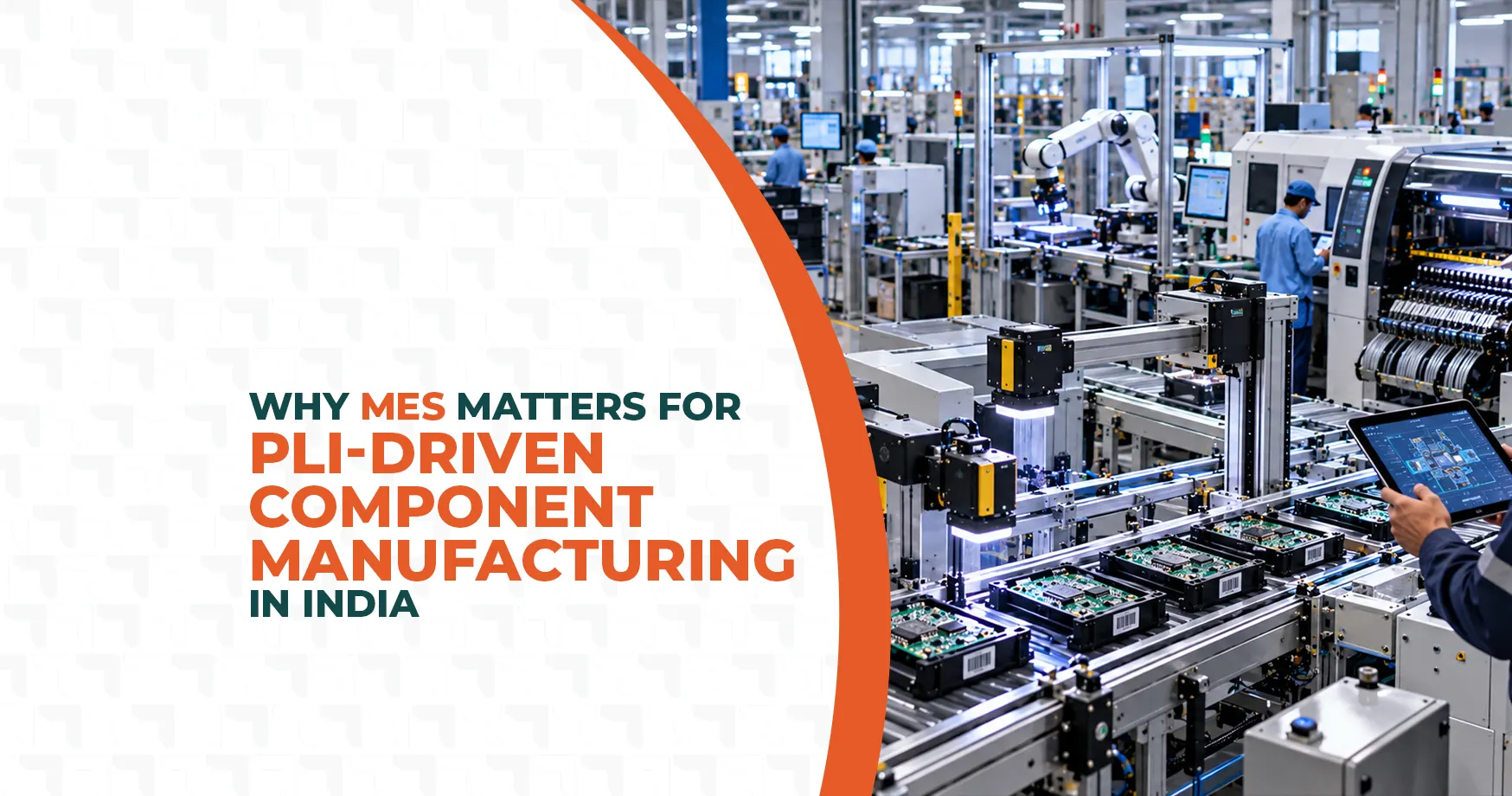
MES is well suited for electronics manufacturing because it supports high-volume assembly, SMT lines, component traceability, and electronics-specific quality control.
It also supports solder paste monitoring and management, MSL handling, and traceability reports.
That makes MES useful for:
- PCB manufacturing
- SMT operations
- Component traceability
- Quality checks during assembly
- Rework management[1][3]
Build quality into every step
MES improves visibility across production. It tracks the 4Ms, connects work orders to execution, and helps teams manage quality checks at the right time.[1][2][3]
That supports end-to-end defect prevention and better right-first-time performance.[3]
What Manufacturers Gain from MES
MES provides clear operational value. The main benefits are already visible in the system design and deployment model.
These include:
- Enhanced quality assurance through defect prevention and built-in quality checkpoints.
- Higher efficiency through better production planning, reduced bottlenecks, and faster execution.
- Manufacturing visibility through real-time dashboards and traceability records.
- Regulatory compliance through audit trails and electronic records.
- Precision in scheduling through real-time production planning.
- Shorter cycle times through faster rework and better workflow control.
For electronics manufacturers, these benefits are not abstract. They affect throughput, quality, and audit readiness every day.
Why MES Is a Strong Fit for PLI Programs
PLI programs reward measurable performance. MES helps manufacturers prove it.
It turns shop-floor data into usable evidence. It links production activity to audits, quality records, and traceability reports.
That is especially valuable when manufacturers must show:
- Production output
- Material usage
- Batch history
- Component genealogy
- Quality actions
- Audit trails
MES also supports manufacturing execution at scale. A well-implemented system gives leaders a single source of truth for shop-floor decisions.
BCI’s Role in the Data Layer
BCI helps manufacturers connect the physical floor to the digital record. Its solutions combine MES, Track and Trace, WMS, manufacturing intelligence, and asset intelligence to support supply chain and manufacturing operations.
For PLI-driven component manufacturing, this matters. The compliance story starts with data capture. It continues through traceability. Then it ends with reporting that auditors can trust.
That is where BCI fits.
Final Takeaway
PLI-driven manufacturing needs more than production capacity. It needs reliable records, traceable processes, and audit-ready reporting.
MES provides that foundation. It supports component traceability, quality control, real-time monitoring, and seamless integration with enterprise and shop-floor systems.
For manufacturers in India, this is a practical advantage. It helps protect incentive claims, tighten operations, and strengthen material traceability in manufacturing.
If you are building a compliant, connected production environment, MES is not just useful. It is a core system.
Request a demo or contact BCI to learn more about our MES and track and trace system solutions.