
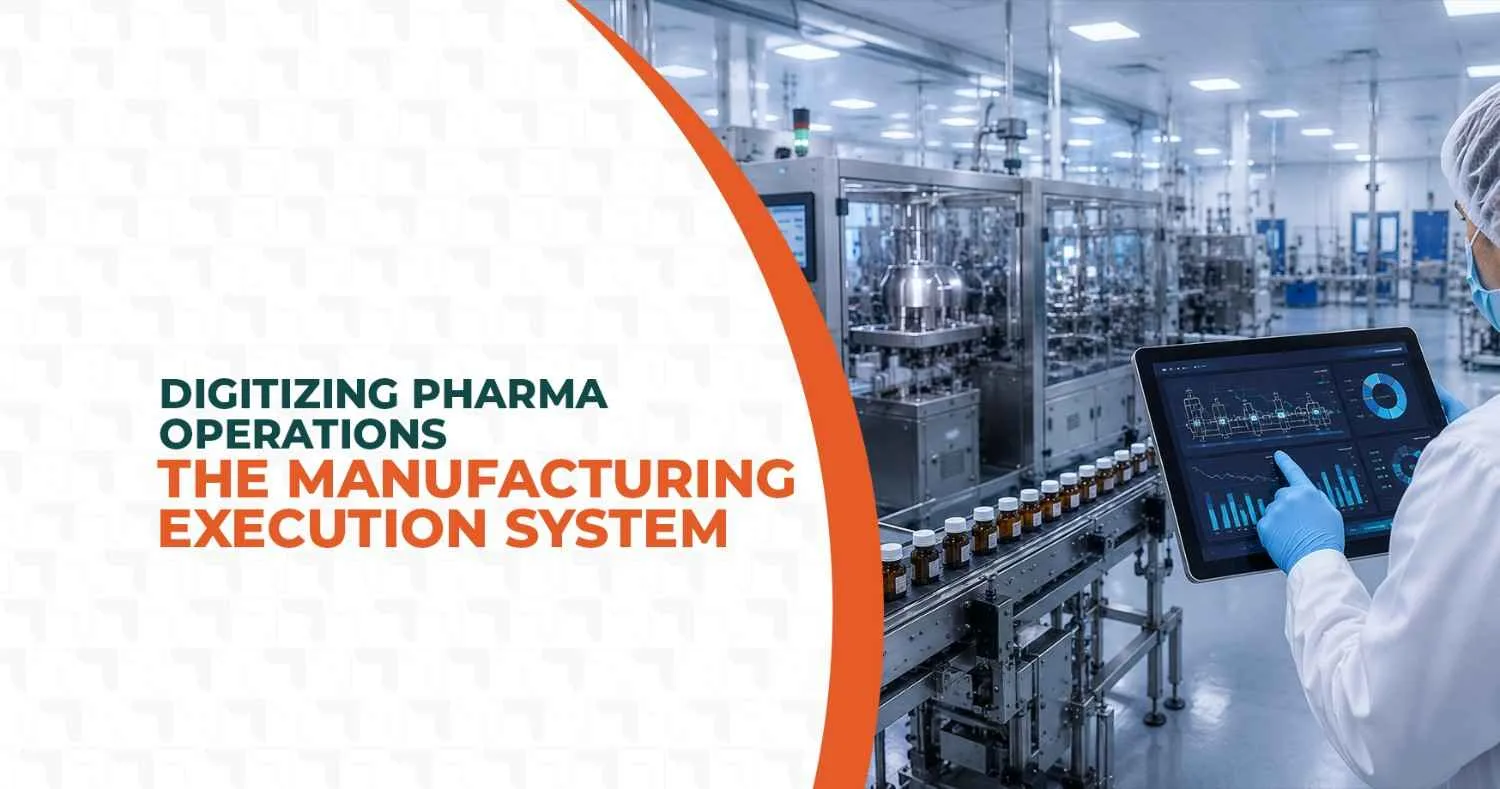
Digitizing Pharma Operations with a Manufacturing Execution System
If you work in pharma manufacturing, you already know the pressure. Every batch needs control, every record needs accuracy, and every deviation needs a fast answer. At the same time, teams have to keep production moving without losing sight of compliance. That is where MES (Manufacturing Execution System) fits in. BCI’s MES helps manufacturers digitize operations, improve quality, and build visibility across production. It also supports batch-level traceability, built-in audit trails, and GMP compliance.
What is MES in the Pharmaceutical Industry?
An MES connects shop-floor execution with production control, giving manufacturers real-time visibility into operations. In pharma, that matters because every step must be captured clearly, validated properly, and traceable later if needed. BCI’s MES supports real-time monitoring, control, visibility, and traceability across production.
It can track the 4Ms, Man, Machine, Method, and Material, in real time. It also captures and validates data at every stage to build genealogy, connecting each part to its source, process, and outcome. In practice, that gives pharma teams a stronger foundation for accountability and product integrity.
Why pharma manufacturers care
Pharma manufacturing depends on precision. BCI’s MES helps maintain batch- and component-level traceability for industries such as pharmaceuticals. It also supports end-to-end traceability and defect prevention through quality checks and records built into the MES.
Why Pharmaceutical Manufacturers Are Adopting MES
Pharmaceutical manufacturers are adopting MES because they need more control, more visibility, and fewer manual gaps. BCI’s MES uses real-time data and seamless integration to improve visibility and control across manufacturing processes.
For example, real-time validations support routing adherence and sequential control. That helps reduce process errors and keeps execution aligned with approved workflows. Meanwhile, real-time dashboards provide KPI visibility at each stage of production.
Key reasons pharma teams move to MES:
· Real-time monitoring of operations
· Batch and component-level traceability
· Audit trails and production records for accountability
· Better scheduling and resource allocation
· Integration with ERP, shop-floor machines, PLCs, SCADA, barcode scanners, and RFID readers
Pull quote: In pharma, MES is not just a production tool. It is a control layer for quality, traceability, and compliance.
Top Challenges in Pharmaceutical Manufacturing That MES Solves
Pharma teams deal with several recurring problems. BCI’s MES addresses many of them through built-in quality control, workflow optimization, and traceability.
1. Process errors and missed validations
BCI’s MES ensures process accuracy through real-time validations, including routing adherence and sequential control. That reduces the risk of execution mistakes on the shop floor.
2. Limited batch visibility
The system captures data at every stage and builds genealogy records. As a result, teams can trace each part back to its source, process, and outcome.
3. Rework and production delays
BCI’s MES supports alert-based decision-making for rework, quality deviations, and tool availability. It also streamlines rework processes to minimize waste and improve production continuity.
4. Shelf-life and material handling issues
The MES monitors material shelf life and expiration, including floor-life and MSL handling. That is essential in environments that manage sensitive materials.
MES and Regulatory Compliance: Meeting GMP, 21 CFR Part 11, and Audit Needs
Compliance is a major reason pharma manufacturers look at MES. BCI’s MES includes built-in compliance with security standards like 21 CFR Part 11, OWASP, and InfoSec protocols. It also supports GMP compliance and pharma-grade audit trails with electronic logs, or eLogs.
That matters because pharma inspections require clear, reliable records. BCI’s MES maintains complete audit trails and production records to support decision-making and accountability. It also supports electronic documentation and weighing scale automation, which simplify regulatory inspections.
How compliance support shows up in daily operations
· Built-in adherence to global standards like GMP and 21 CFR Part 11
· Full audit trails for production and quality records
· Electronic logs for pharma-grade traceability
· Automated weighing scale integration and inspection-based workflows
In short, the MES helps teams keep records cleaner and inspections easier to manage.
How MES Improves Electronic Batch Records and Batch Release Processes
BCI’s MES is designed to capture data across the production lifecycle and maintain production records. That makes it a strong fit for electronic documentation needs in regulated environments. It also supports traceability reports and genealogy records for compliance and visibility.
For batch release workflows, the value is straightforward. If each step is validated, recorded, and visible in real time, teams spend less time reconciling gaps later. As a result, review cycles become more manageable.
The system also supports real-time dashboards for each stage of production. That gives supervisors and quality teams a faster view of what happened, where it happened, and what still needs attention.
Key Benefits of MES for Pharmaceutical Companies
BCI’s MES is built to drive manufacturing excellence by improving quality, efficiency, compliance, and sustainability. For pharma companies, the biggest benefits are practical and easy to measure.
Quality assurance
The MES provides end-to-end defect prevention with real-time validations and built-in quality checkpoints. It also supports product integrity through traceability down to batch or component level.
Operational efficiency
The system streamlines workflows and resource usage to enable higher throughput. Continuous monitoring helps support product quality and reduce process variability.
Scheduling and responsiveness
Real-time production planning helps ensure accurate timelines and minimal delays. Visibility into capacity and constraints also supports timely order execution.
Faster time to market
Reduced cycle times and rapid rework processes help accelerate product delivery. Integration and automation also minimize manual interventions and errors.
MES Integration with ERP, Shop-Floor Systems, and Automation
Integration is a core strength of BCI’s MES. It supports seamless two-way integration with ERP, shop-floor machines, PLCs, SCADA, and AIDC hardware such as barcode scanners and RFID readers. It also supports mobile, web, and Android platforms.
For pharma manufacturers, this matters because data should move cleanly between systems. The MES helps connect production execution with broader enterprise workflows. That creates a more complete view of operations without forcing teams into manual reconciliation.
It also supports packaging and handling systems for downstream coordination. In practice, that helps keep production and logistics aligned.
Emerging Trends: AI, Digital Visibility, and Smart Manufacturing
MES is becoming more data-driven across manufacturing. MES platforms are aligning with Industry 4.0 technologies like IoT, artificial intelligence, and machine learning. These systems use connected machines and smart sensors to feed real-time data into MES for immediate insight.
Advanced analytics can support predictive maintenance, energy trend analysis, and identification of blockage root causes. It also highlights sustainability as a growing focus, with MES tracking material usage, energy consumption, waste output, and carbon footprints in real time.
For pharma manufacturers, that points to a future where MES is not just about recording work. It is about helping teams make better decisions, faster.
Conclusion: Why Pharma Manufacturers Should Look at MES Now
For pharma manufacturers, MES brings together traceability, quality control, compliance support, and real-time visibility in one system. It helps teams track the 4Ms, reduce waste, manage rework, and maintain audit-ready records. It also supports compliance and pharma-grade audit trails through electronic logs and automation.
If your team is looking to improve manufacturing traceability, strengthen compliance, and get better control over shop-floor execution, BCI’s MES is built for that need. It is a single-window solution designed to support quality, efficiency, flexibility, and data-driven decision-making.
Ready to explore MES for your pharma operations? Contact Bar Code India to request a demo and see how the solution fits your manufacturing needs.