
Most Warehouse Investments Are Solving the Wrong Problem
Why BCI Believes Warehousing Is Entering an Intelligence-Led Era
Visibility Was Never the End Goal
For decades, warehouse transformation focused on improving visibility across operations.
At Bar Code India (BCI), we have seen this evolution firsthand — from barcoding and RFID adoption to enterprise warehouse management systems and connected supply chain infrastructure.
For the last decade, warehouse technology investments have largely focused on one objective: visibility.
More dashboards. More tracking. More operational data across every workflow.
And yet, many warehouses continue to struggle with delayed responses, operational bottlenecks, inconsistent execution, and rising supply chain pressure.
Because visibility was never the real constraint.
The real challenge is that most warehouse systems were built as systems of record — not systems of intelligence.
They capture what happened. They rarely influence what should happen next.
That distinction matters more today than ever before.
Warehouses Already Have Data. What They Lack Is Decision Velocity.
Modern warehouses generate enormous volumes of operational data every minute.
Inventory movements. Pick rates. Replenishment signals. Exceptions. Delays. Scan events.
Most operations already have visibility into these workflows through WMS platforms, ERP integrations, barcode infrastructure, RFID environments, and reporting systems.
But despite this, operational issues are still frequently identified too late.
A disruption becomes visible only after throughput is impacted. A replenishment issue escalates before intervention happens. A delay is detected after service levels are already affected.
The problem is no longer data availability.
The problem is interpretation.
Why More Dashboards Are Delivering Diminishing Returns
For years, the industry assumed that more visibility would naturally improve execution.
But visibility without operational interpretation creates a new problem: noise.
Warehouse teams today are overwhelmed with reports, alerts, dashboards, and disconnected operational signals.
Every system is reporting. Few systems are prioritizing.
As warehouses become more complex — with more SKUs, tighter fulfillment windows, and greater operational variability — organizations need systems that can:
- Understand operational context
- Identify what actually matters
- Detect patterns before disruptions escalate
- Guide faster operational decisions
This requires a shift away from static reporting toward continuous operational intelligence.
The Industry Is Entering a New Operational Phase
At BCI, we believe the next shift in warehousing is not about collecting more data.
It is about building systems that operate alongside execution.
Systems that continuously:
- interpret operational signals
- prioritize actions
- connect workflows
- support decisions in real time
This is where platforms like BCI NAVI are beginning to reshape warehouse operations.
Not simply by automating workflows. But by reducing the gap between operational signals and operational action.
From Visibility to Decision Systems
Traditional warehouse systems were designed to create operational visibility.
The next generation of operational infrastructure will focus on decision systems.
Systems capable of continuously understanding what is happening across operations and helping teams respond faster, more consistently, and with greater context.
This is no longer theoretical.
Across manufacturing, logistics, and supply chain environments, organizations are increasingly exploring how AI-driven operational intelligence can improve responsiveness, reduce operational delays, and support more connected execution.
The shift has already started.
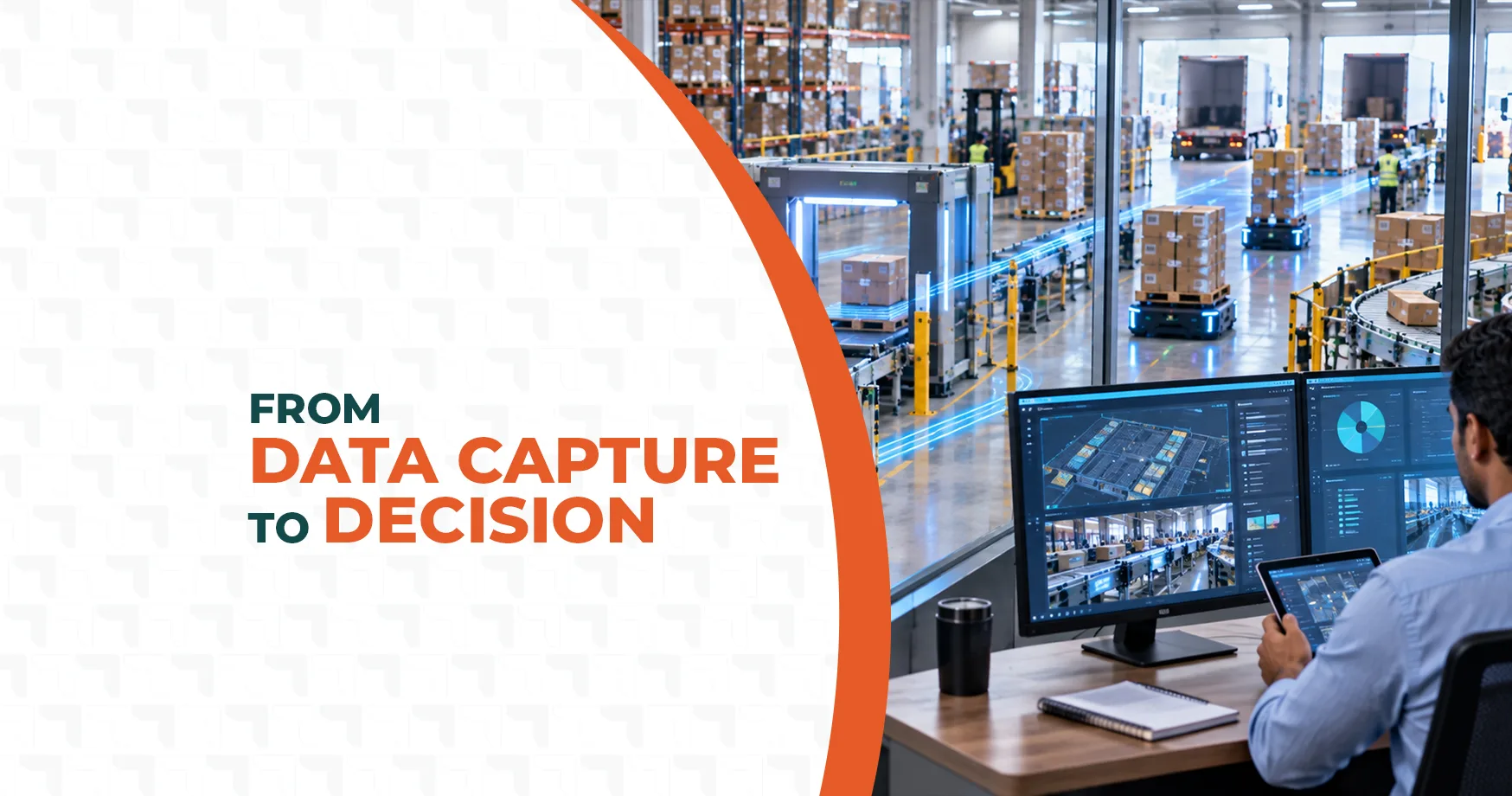
What comes next will be defined by how effectively organizations convert operational data into operational decisions.