
RFID in Logistics: Why It Matters for Manufacturing Operations
Manufacturing logistics needs speed, accuracy, and control. When inventory moves across warehouses, production areas, and dispatch points, manual checks create delays and errors. RFID helps reduce that friction by enabling automatic identification and real-time tracking across operational touchpoints.
For manufacturers, that matters because logistics performance affects production flow, shipment accuracy, and compliance readiness. BCI supports customers with WMS, MES, Track & Trace, and automation technologies designed to improve supply chain and manufacturing operations. RFID strengthens those workflows when visibility and traceability are critical.
In short, RFID is becoming a practical tool for manufacturers that want better logistics execution and less manual effort.
Why RFID in Logistics Is Gaining Attention
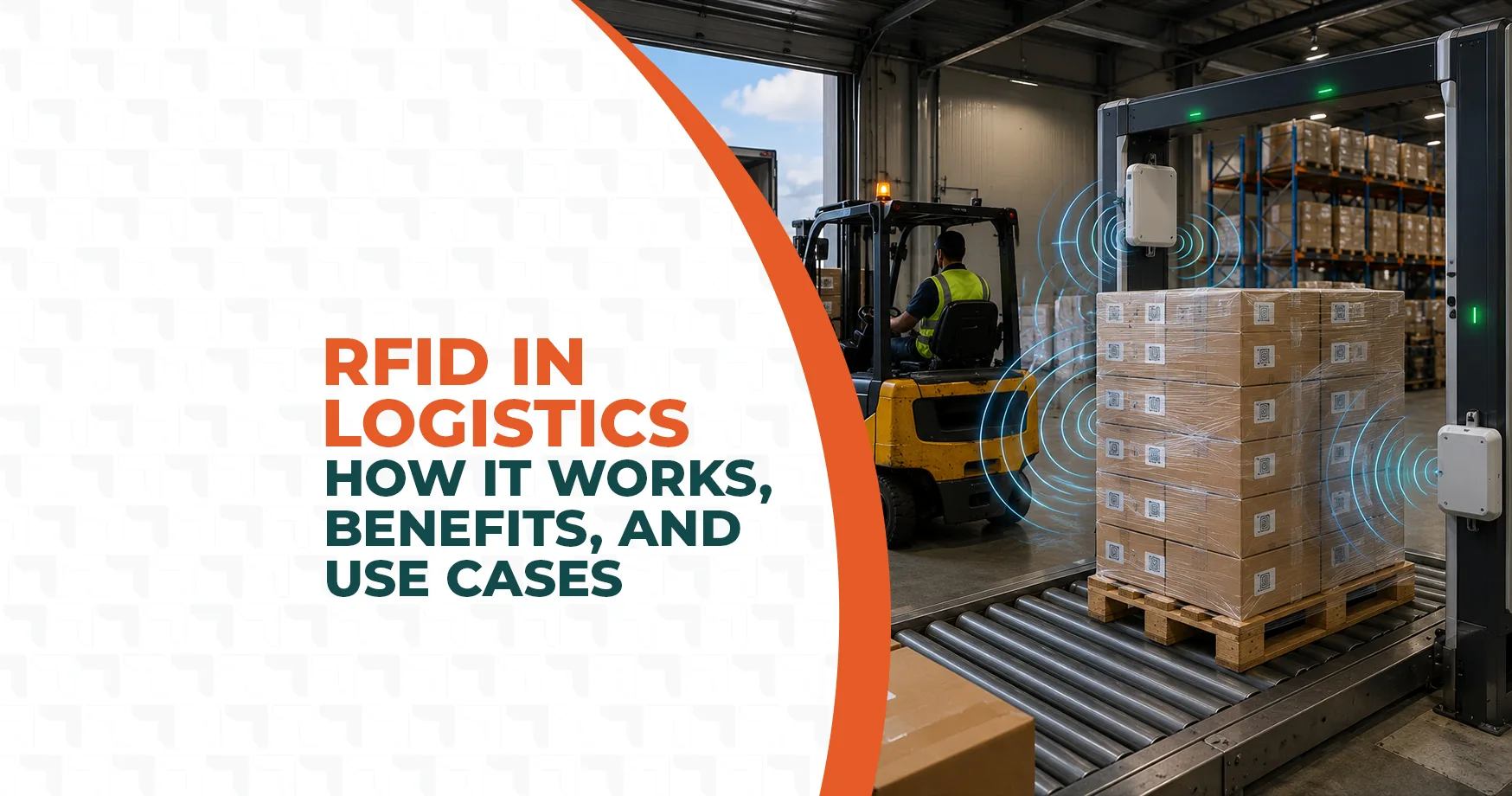
RFID uses radio waves to identify and track items, and it can read multiple items without direct line of sight in many use cases. That makes it well suited for logistics environments where pallets, containers, assets, and goods move quickly.
RFID also supports inventory management, tool and asset tracking, equipment tracking, vehicle monitoring, and supply chain logistics. In practice, that gives operations teams better visibility into what is moving, where it is moving, and whether records match reality.
What RFID improves in logistics?
- Faster item identification
- Better inventory accuracy
- Less manual scanning effort
- Stronger shipment visibility
- Better support for automated workflow
At the same time, RFID strengthens audit readiness through automated traceability trails. That is especially important in manufacturing environments where compliance and operational control go hand in hand.
Where RFID Delivers the Most Value
RFID creates value when it improves everyday logistics work. The biggest gains usually come from high-volume, repetitive, or error-prone processes.
1. Inbound receiving
RFID helps capture material movement automatically as goods pass through checkpoints. That reduces manual verification and speeds up receiving.
Business impact: faster put-away, fewer delays at the dock, and better inbound record accuracy.
2. Inventory movement and storage
RFID supports real-time inventory updates in warehouse workflows. It helps teams track materials as they move through receiving, storage, and dispatch.
Business impact: better inventory visibility, fewer stock mismatches, and stronger control over warehouse flow.
3. Dispatch verification
RFID portals can automatically capture shipment identity during exit movement. That helps prevent incorrect shipments and reduces dependency on manual checks.
Business impact: fewer shipping errors and stronger compliance validation.
4. Returnable transport items
RFID is also useful for tracking reusable logistics assets. These items often move between sites and are easy to lose without digital visibility.
Business impact: better asset accountability and lower loss risk.
5. Production and warehouse coordination
RFID connects physical movement with ERP, MES, and warehouse systems through event capture. That helps teams maintain accurate production and inventory records.
Business impact: better alignment between logistics activity and shop-floor execution.
Barcode vs. RFID in Logistics
Barcodes still matter. They remain effective for many workflows. RFID becomes more valuable when operations need faster scanning, simultaneous reads, and less manual handling.
Factor
Barcode
RFID
Line of Sight
Required
Not required in many use cases
Read speed
One item at a time
Multiple items can be read together
Manual effort
Higher
Lower in suitable workflows
Visibility
Point-based
More continuous
Best fit
Routine identification
High-volume logistics and automation
How to choose
- Use barcodes for standard scanning needs.
- Use RFID when speed and visibility matter more.
- Use both when the operation needs a hybrid approach.
That said, the real decision should come from the business problem, not the technology label.
RFID and Automation in Manufacturing
RFID fits naturally into automation in manufacturing because it creates cleaner, more reliable operational data. That data can support better inventory management, traceability, and workflow control.
BCI’s solutions use barcoding, RFID together to improve visibility across assets and supply chains. The company also supports seamless integration with ERP systems and shop-floor machines, along with real-time dashboards and analytics. Those capabilities matter because RFID creates the operational layer that automation needs.
What this enables
- Better decision-making from current data
- Stronger inventory control
- Faster exception handling
- More efficient logistics workflows
- Better traceability and compliance
RFID also helps reduce manual labor and scanning time, which can improve productivity and speed across the supply chain.
Why It Matters for Manufacturing Decision-Makers
For plant heads, supply chain leaders, and operations teams, RFID is not just a tracking tool. It supports the broader shift toward smarter, more connected logistics.
BCI’s manufacturing intelligence work shows how better visibility supports equipment performance, operational efficiency, production yield, resource allocation, and quality control. In logistics, the same principle applies. When teams have more accurate movement data, they can act faster and manage operations more tightly.
RFID also supports faster lead and cycle times across production and logistics. That makes it valuable in environments where delays have a direct impact on service levels and customer commitments.
When RFID Makes Sense
RFID is worth evaluating when manual control starts to slow the business down.
Look for these signs
- Inventory counts take too long
- Inventory accuracy changes often
- Manual checks slow receiving or dispatch
- Material search delays production
- Returnable assets go missing
- Multiple locations need better visibility
- Compliance and audit readiness need improvement
If several of these sound familiar, RFID may be a strong fit for your logistics operation.
Conclusion
RFID in logistics has moved beyond basic identification. It now supports real-time visibility, better compliance, faster movement control, and stronger operational decision-making.
For manufacturers, that means less manual effort, better data consistency, and tighter alignment between logistics and production. It also creates a stronger foundation for warehouse automation, supply chain traceability, and digital operations.
BCI helps customers build these capabilities through WMS, MES, Track & Trace, and automation solutions designed for modern manufacturing and supply chain environments.