
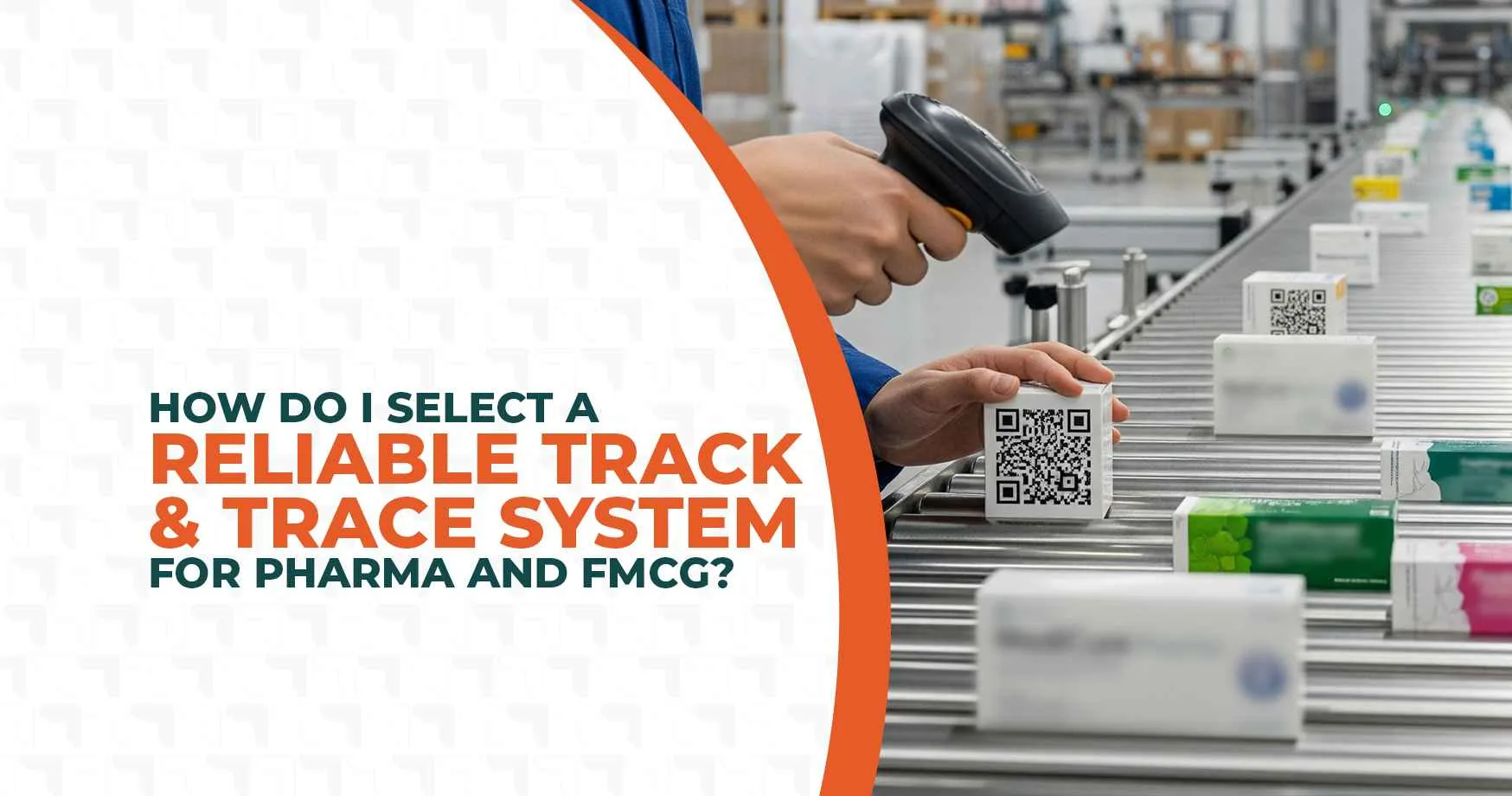
How to Select a Reliable Track & Trace System for Pharma and FMCG?
Pharma and FMCG companies operate in industries where traceability is directly linked to consumer trust, regulatory compliance, and brand reputation. A strong Track & Trace system ensures that every unit produced, packaged, and delivered is genuine, compliant, and easily traceable.
Selecting the right solution requires evaluating technology, regulatory readiness, and how well it supports real-time decision-making across the supply chain.
Why Pharma and FMCG Need Advanced Track & Trace?
1. Pharma Requirements
For the pharmaceutical sector, Compliance with DSCSA, EU FMD, and India DAVA is mandatory. A reliable solution should meet pharma serialization standards and address critical track and trace compliance requirements by providing:
- Batch-level tracking aligned with serialization and aggregation requirements.
- Data integrity and audit trails to pass stringent regulatory inspections.
- Rapid product recall and withdrawal through accurate batch number tracking.
- Smooth integration with ERP and serialization platforms for multi-country pharmaceutical compliance.
- Counterfeit detection using unique serialization for product authentication by leveraging QR/barcode and RFID technologies.
- Consumer product authentication features that allow patients to verify medicine authenticity instantly.
2. FMCG Requirements
The FMCG sector focuses on brand protection and reputation management while ensuring large-scale production visibility. A reliable system should enable:
- FMCG supply chain traceability across manufacturing, distribution, and retail.
- Post-purchase consumer engagement through product authenticity and e-warranty features.
- Real-time inventory monitoring with cloud analytics for supply chain optimization.
- Consumer loyalty programs are built around authenticity verification.
- Recall management systems capable of quick and accurate product withdrawals.
The best track and trace solution in India must cater to both these industries with customized workflows and compliance-ready features.
Key Features to Look for in a Reliable Track & Trace System
1. Serialization and Aggregation Excellence
A system must support serialization and aggregation requirements for pharma and FMCG high-speed traceability. The top product traceability system should create clear parent-child hierarchies for every SKU, carton, and pallet.
2. Complete Supply Chain Visibility
Advanced supply chain visibility software gives real-time insights across all nodes of the network. This is critical for inventory and distribution network integration, whether for multi-country pharmaceutical compliance or large FMCG distribution chains.
3. Compliance and Validation
Systems designed for the life sciences industry should handle complex track and trace compliance challenges, offering cloud analytics, a robust audit trail detailed regulatory reporting. FMCG companies, on the other hand, should look for systems that validate product information across multiple checkpoints to maintain operational accuracy.
4. Counterfeit Detection and Recall Management
A strong recall management system allows rapid isolation of defective batches, while serialization, along with the right AIDC hardware, helps detect counterfeits before or after they reach consumers. For FMCG brands, this is crucial to prevent market contamination; for pharma, it is vital for patient safety.
5. Consumer Authentication and Engagement
Today’s consumers demand transparency. A reliable cloud-based system can facilitate consumer trust through authenticity verification features, such as mobile-based scanning for consumer product authentication. For FMCG, this extends to post-purchase consumer engagement and loyalty initiatives.
6. Scalability and Deployment Model
A modular and scalable track and trace architecture ensures the system can adapt to growing operations. Cloud-based track and trace deployment is ideal for both industries because it allows faster implementation, supports global operations, empowers the consumer base, and ensures continuous updates for changing compliance norms.
7. Analytics and Reporting
The ability to generate analytics for regulatory reporting and operational performance is no longer optional. Pharma companies need compliance dashboards, while FMCG brands can use analytics for inventory and distribution network integration and demand forecasting.
How to Evaluate the Right Track and Trace Solution Provider?
Selecting the best track and trace solution in India requires more than comparing product brochures; it demands a thorough assessment of the vendor’s experience, technology readiness, and ability to meet industry-specific challenges.
1. Proven Industry Experience
Work with vendors who have successfully deployed systems for pharmaceutical compliance and large-scale FMCG operations. In pharma, this means expertise in pharma serialization standards, batch-level tracking, and adherence to compliance with DSCSA, EU FMD, and India DAVA.
For FMCG, experience in FMCG supply chain traceability and perishable material handling is essential. Verified case studies and regulatory know-how reflect their capability to handle complex projects.
2. Strong Technology Infrastructure
A reliable provider should offer integrated solutions combining software and hardware. Look for vendors supplying traceability/track and trace or serialization software, barcode and RFID hardware, and IoT sensors, along with machine vision systems for robust quality control and real-time inventory monitoring. Compatibility with existing operations and integration with ERP and serialization platforms ensures faster adoption without disrupting current workflows.
3. Scalability and Compliance Readiness
The system should support a modular and scalable track and trace architecture to grow with business needs. Vendors must be prepared for evolving regulations by providing cloud-based and industry-specific track and trace deployment, comprehensive and established workflows, automated updates, and analytics for regulatory reporting.
4. Ongoing Support and Training
Choose partners who offer continuous technical support, user training, and updates to address track and trace compliance challenges. A knowledgeable support team ensures minimal downtime and consistent performance, which is crucial for rapid product recall and withdrawal when required.
Conclusion
The smartest way to choose the best track and trace solution in India is to begin with a clear picture of what matters most to your operations. For pharma, that often means looking beyond basic serialization and asking:
- Can this system secure data at every step?
- Does the system ensure identification and traceability of the product across every packaging and handling level?
- Does it ensure cross-border compliance and facilitate accurate and quick recalls?
- Does it ensure audit trails for each and every step and process from production to consumption?
FMCG brands, meanwhile, should question
- How well does the solution track products across vast distribution networks?
- Does the system ensure identification and traceability of the product across every packaging level?l
- How will it support real-time inventory monitoring and engage buyers after purchase with verified authenticity?
Don’t settle for brochures. Request product demos, test vendors with recall or counterfeit scenarios, and observe how they respond. Few vendors excel in both pharma and FMCG, and this is where Bar Code India leads. With proven implementations, compliance expertise, and scalable technology, BCI ensures reliable traceability, brand protection, and stronger consumer trust.
FAQs
1. Does a Track & Trace system help speed up production processes?
By offering real-time inventory monitoring and instant validation at every stage, it identifies slow points in the production line, allowing quicker adjustments and better resource use.
2. How safe is sensitive pharmaceutical data on cloud-based systems?
Leading cloud-based track and trace deployment solutions use trusted hosting platforms and apply layered encryption and restricted access controls, keeping regulatory data secure during storage and transfers.
3. How can barcodes/QR codes and RFID help in preventing counterfeits?
Barcode/QR code and RFID can provide a unique identity, often called unique serialization, to each SKU. Once the barcode or RFID tag is scanned, the data encrypted inside can be read and verified from a centralized database. This verification can empower consumers, internal teams, or third-party auditors to check for counterfeit products.
4. Can loyalty programs be connected to traceability features?
Yes, FMCG brands can link consumer product authentication scans to digital rewards, encouraging customers to verify genuine products and increase consumer engagement.
5. Are Track & Trace systems practical for smaller manufacturers?
Scalable systems allow them to start with basic batch-level tracking and add advanced compliance features, comprehensive workflows, and robust validations as operations grow.
Share this page

India Has Built a Defence Manufacturing Industry. Now It Has to Prove What It Builds
What Is Pharmaceutical Serialization? Definition, Requirements & How It Works
Types of Inventory Control: Systems, Methods, and Technologies for Better Warehouse Visibility